
By Michael Grey*

We can scarcely be surprised that increasingly confused noise emerges from the hostilities in the Gulf and Straits of Hormuz, with markedly diverse reports coming from the warring parties. Both the United States and Iranians claim to be completely in control of the waterway, with the former’s blockade holding firm and the latter’s attacks on passing shipping continuing unabated. The US suggests that oil tankers are moving through the contested waters in considerable numbers under their energetic protection, while the communiques from the Iranians emphasise their ability to attack any ship that fails to do their bidding.
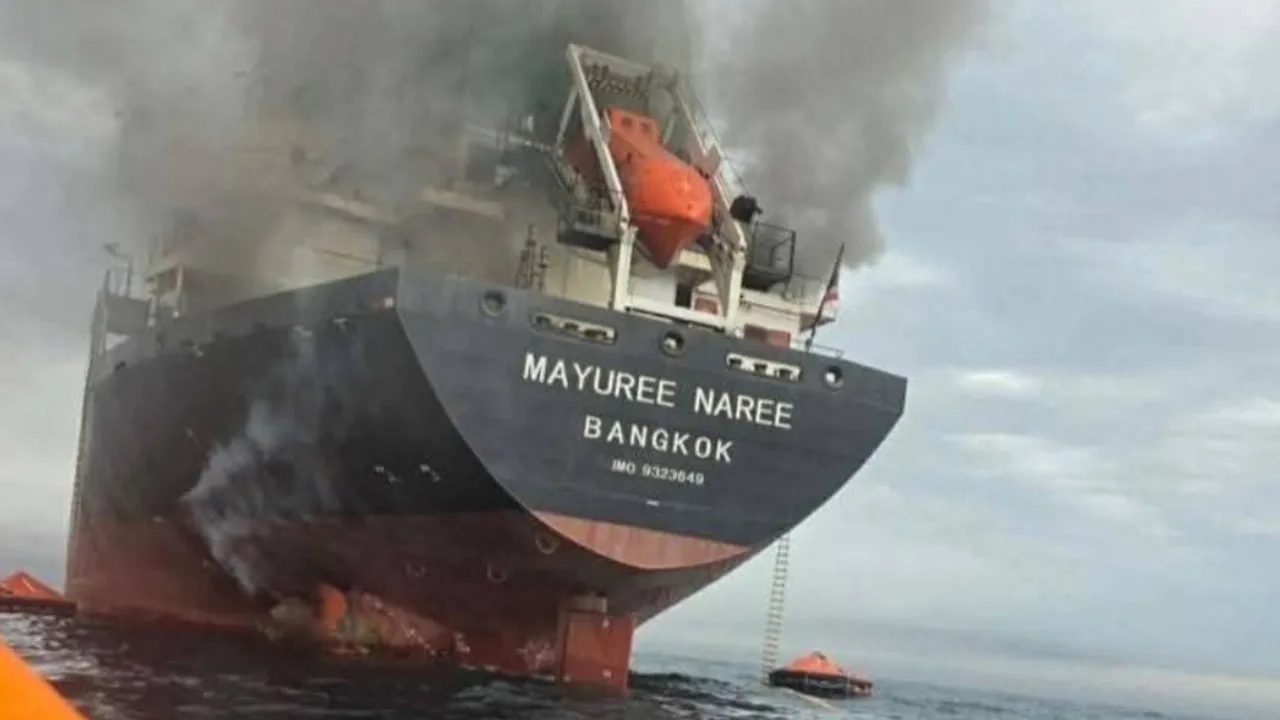
There is, however, no argument that ships are being hit by mines, drones and missiles, with deaths and injuries reported, although it has been suggested that a majority of ships have now become reluctant to report attacks to the co-ordinating UK Maritime Trade Operations organization (UKMTO).
The UKMTO, which had been regarded as a reliable source of information about the hostilities in the region, now finds itself less able to do this job, and has noted that something of a fog of war has descended. The once simple tool of AIS as a tracking aid has become particularly unreliable, with ships, depending on the advice they are given at any moment in time, switching it off and on.
Why would a ship under attack not report the fact? One can imagine that in such a confused situation there are more important things to do, such as looking after the lives of the crew and tackling fires or flooding. There may be very reasonable apprehension of another attack, which might justify radio silence. Or might it be that the reports from attacked ships are often relayed via naval forces, which are, for security reasons, not passing them on?
It has been suggested that the US forces are anxious (or politically pressurised) to demonstrate that transits through the straits are perfectly safe and substantial numbers are making the passage under their protection. It might be an unworthy suggestion, but maybe the preoccupations of the US Commander in Chief have switched from the regional hostilities, to the flow of oil, insofar as this assists in his Mid-Term election chances. Some critical commentators have alleged that President Trump has lost interest in the whole Iranian adventure and is only concerned with extricating himself from this unrewarding task, whatever this might mean to the strategic waterway.
The statistics issued by the UKMTO present a rather less rosy picture of the numbers of ships moving, to those provided from the US commanders, who are clearly anxious to stress their ongoing protective efforts. An objective observer might ask whether accurate numbers of successful transits and casualties are in fact possible in the prevailing circumstances.
Elusive trustworthy picture…
From the point of view of those aboard merchant ships, their loved ones and those operating these ships, it would be advantageous if a more trustworthy picture could be made available, if only to get a better assessment of the realities of risk.
What are the chances of being hit? Most merchant mariners do not go to sea to find themselves in a war zone, and such hazards have been multiplying both in the middle east and elsewhere. Do they really have choice (as provided in law) in the event their ship is directed to a place where there is a chance they will end up as targets? It might be that they will be given bonuses for braving such hazards, but how many, from countries where decently paying jobs are exceedingly rare, are forced to take risks that others, in happier situations, would not. It is worth noting that the Black Sea is increasingly not a location for the faint-hearted.
Others unwittingly find themselves aboard ships which have been sanctioned and run other sorts of risks, with more nations prepared to intervene to stop or even seize these vessels. And pretty well anybody, in a growing number of regions where conflict is close, will find that their instruments are subject to electronic spoofing and hacking, thus providing another source of doubt. One might say that this is a more “physical” symptom of the fog of war, which may not lift in a hurry.
*Michael Grey is former editor of Lloyd’s List. This column is published with the kind permission of The Maritime Advocate.