

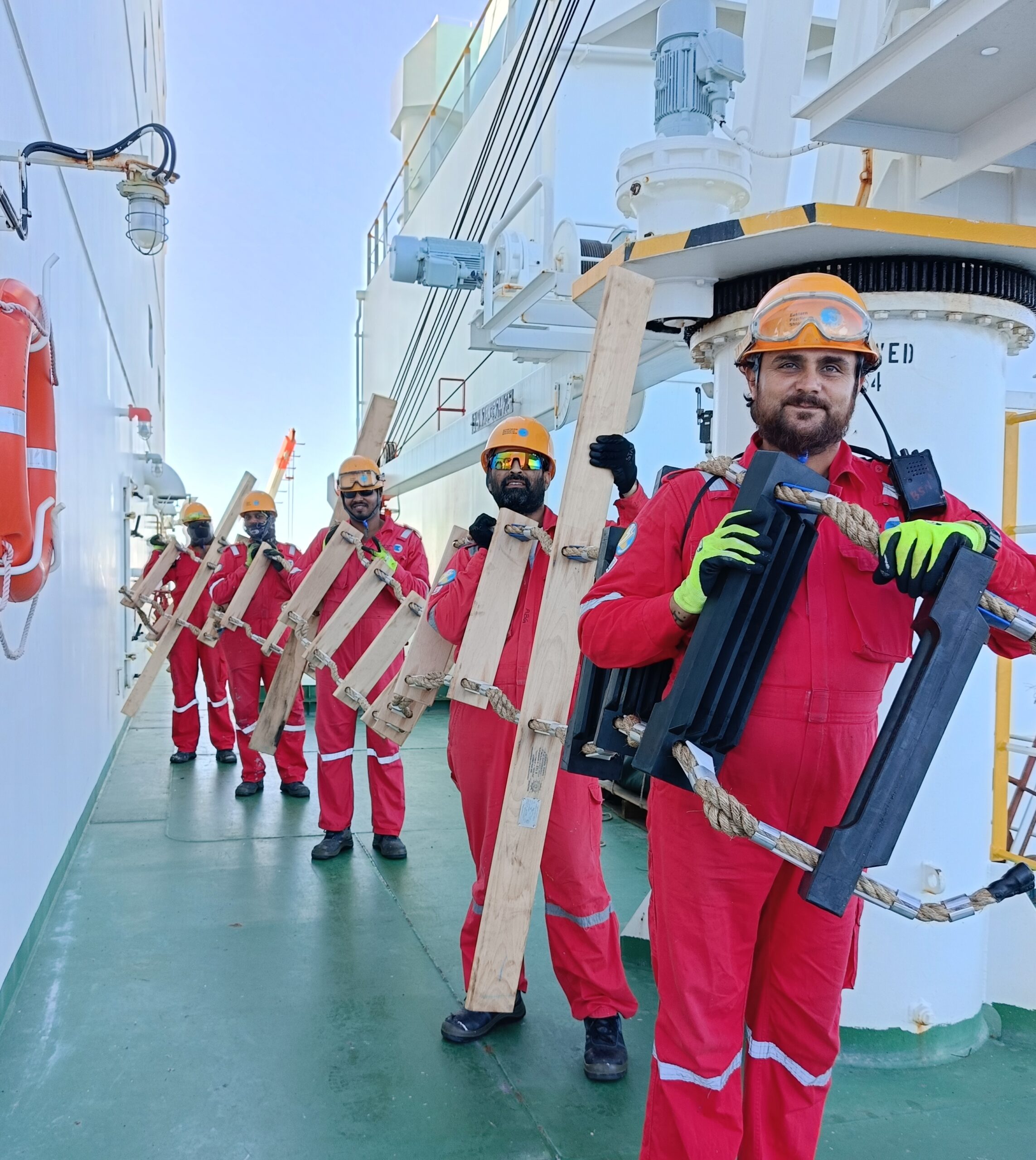
Singapore – Five years after the launch of the Delivering on Seafarers’ Rights Code of Conduct, a growing number of shipping companies are demonstrating real change in seafarer welfare. However, across the industry as a whole, welfare improvements are not always reaching many seafarers, according to a new progress report published today by the Sustainable Shipping Initiative (SSI), the Institute for Human Rights and Business (IHRB), the Mission to Seafarers, the Rafto Foundation for Human Rights, RightShip and TURTLE.
The report, Five Years into the Code of Conduct: What’s Changed for Seafarers? draws on three previously unpublished data sources. Data from RightShip’s Crew Welfare Self-Assessment (CWSA), the tool through which ship operators self-assess against the Code of Conduct, reveals clear progress in many areas of crew welfare.
More than 1,000 companies have now completed the CWSA, together accounting for over 13,000 vessels and around 300,000 seafarers, with participation increasingly reaching beyond the largest operators. Despite this progress, results of two new studies among seafarers themselves – commissioned specifically for the report – paint a less rosy picture across the wider industry. Both of these studies revealed that, for many seafarers, core aspects of welfare still fall short.
The comparative insights from the report highlight:
- Fair terms of employment are one of the strongest-performing areas among CWSA participants, with overall attainment of 90%. Among seafarers surveyed, 76% said their wages were always paid correctly, in full and on time, but delayed pay and employment terms remain a concern for almost a quarter of respondents.
- Crewing is an area of high attainment among CWSA participants, at 88%. However, only 49% of seafarers surveyed said there had been enough crew on board during their most recent contract to work safely, without excessive fatigue or breaches of agreed rest hours.
- Trust remains fragile across the industry as the seafarer study showed fewer than six in ten (59%) said they would feel safe raising a serious concern without fear of consequences, and the remainder either would not, or were unsure.
- Crew wellbeing still requires the most universal attention across all data sets. Attainment among CWSA participants sits at 76%, the lowest of the areas covering owners and operators, and progress within it is uneven, although there is clear movement in the right direction.
- The share of companies participating in the CWSA charging seafarers for internet access has fallen from 18.4% in 2024 to 8.5% in 2026.
- Mental-health training has risen from 64% to 76% since 2024 amongst the CWSA cohort of ship owners and operators. The seafarer surveys indicate that mental health support still needs further improvement: 56% said they had free mental-health support or confidential counselling available and would feel safe using it. However, another 17% had support available but would not feel safe using it, and 27% had no access at all to such services.
The report calls on charterers, cargo owners, insurers, financiers, regulators and flag states to make crew welfare visible in the commercial and regulatory decisions that determine which operators succeed, arguing that scaling what leading companies have already proven is possible is the defining task of the next five years.
(Photo from SSI)