
Asserting that existing rules exceed international standards and impose unnecessary costs on American mariners, the U.S. Coast Guard proposes deregulatory action dropping six training and competency requirements for certain Merchant Mariner Credential endorsements.
In a notice published Oct. 1 in the Federal Register, the U.S. Coast Guard proposes removing six requirements related to endorsements for the International Convention on Standards of Training, Certification, and Watchkeeping for Seafarers and the Seafarer’s Training, Certification, and Watchkeeping Code (STCW).
Changes would affect Masters and Officers in Charge of a Navigational Watch of less than 500 GT in near-coastal waters; Officers in Charge of an Engineering Watch, Designated Duty Engineers, and Electro-technical Ratings of 750 kW/1,000 HP or more. This proposed action includes technical revisions to remove duplicative or outdated language from the regulatory text, reduces regulatory burdens, and promotes equivalent compliance standards with international requirements.
Comments from interested parties and related material must be received by the Coast Guard on or before December 30, 2026.
The requirements were added when the Coast Guard implemented the 2010 amendments to the STCW Convention through regulations adopted in 2013. The Coast Guard now says the six requirements are not required under U.S. law or minimum international STCW standards and are unnecessary for the safe operation of the vessels covered by the proposal.
However, the requirements will remain in place for deck officers serving aboard larger vessels of 500 GT or more and those operating on ocean routes, where bridge watch teams typically consist of many personnel.
For engineering officers, the Coast Guard said the separate Engineering Terminology and Shipboard Operations course duplicates knowledge already gained through broader engineering training, onboard service and examinations.
The Coast Guard estimates an average of about 825 mariners per year would benefit from the changes. It calculates approximately $42.8 million in total discounted cost savings over 10 years, primarily from avoided tuition, travel expenses and time spent attending courses.
Cost savings benefits
“As a deregulatory action, this proposed rule would not impose any new costs on mariners or the Federal Government,” the USCG said. “The removal of LMS training, BRM training, ETSO training, CSM training, HVPS training, and the requirement to meet the standard of competence in LTW skills would reduce the burden on affected mariners, as they would no longer need to complete these trainings or provide evidence of meeting the standard of competence in LTW skills to obtain or retain their respective STCW endorsements.
“The benefits of this proposed rule would be realized as cost savings for mariners and the Federal Government. Removing the LMS training requirement would lead to an annualized cost savings for deck officers of $991,977; removing the BRM training requirement would lead to an annualized cost savings for mariners of $98,545; and removing the ETSO training requirement would lead to an annualized cost savings for mariners of $4,920,634. These cost savings would include tuition, the opportunity cost of time spent attending training, the travel costs associated with training, and the opportunity cost associated with compiling the documentation required as part of an application for an MMC.”
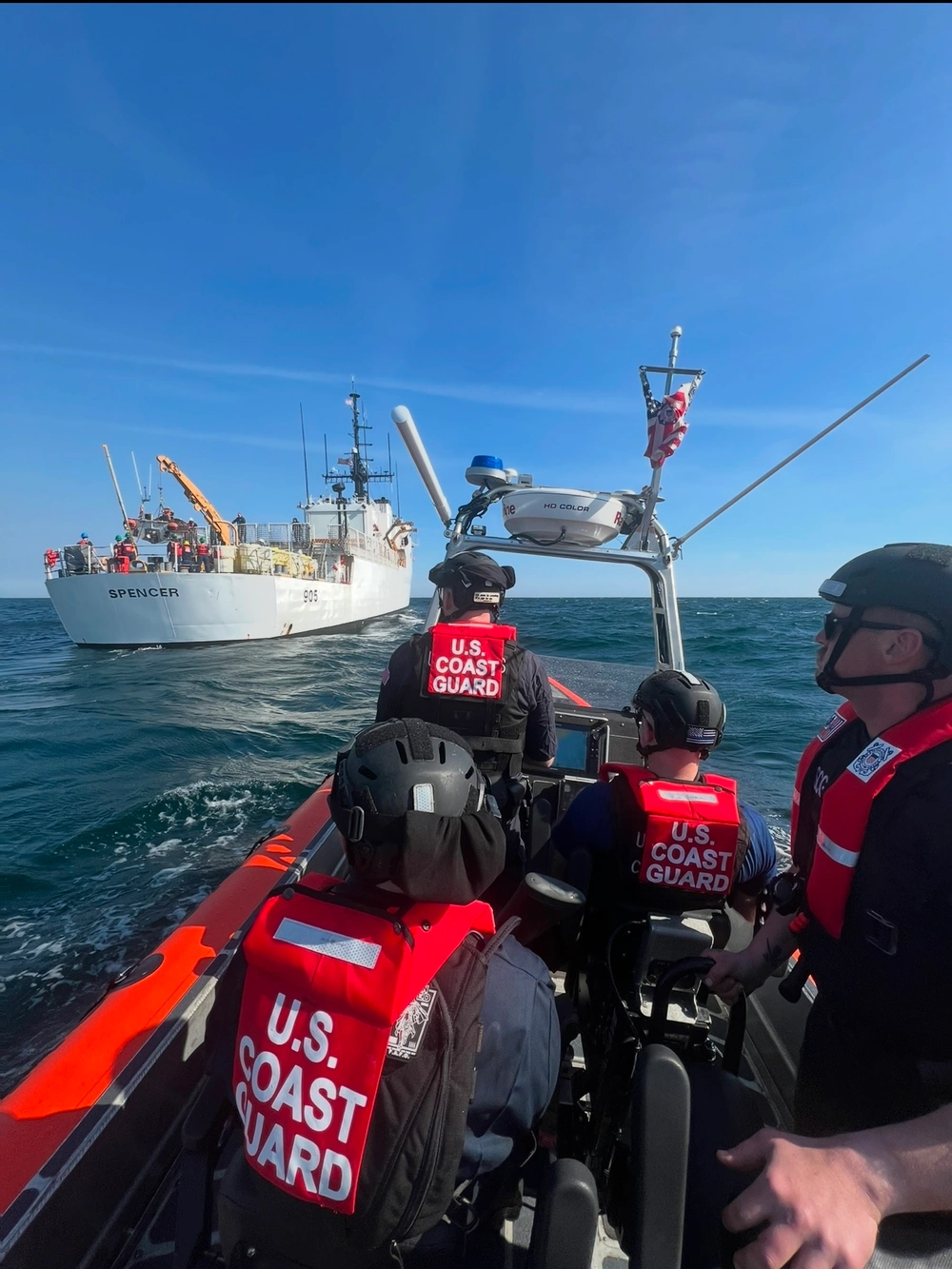
(U.S. Coast Guard photo of cutter Spencer by Petty Officer Haylee Casey)