
Record exports of commodities are moving to new and growing overseas markets this year as the Port of Vancouver helps transport more of what Canadians make, mine, harvest and grow to more customers. Overall cargo volumes for the Port of Vancouver hit a record 88.1 million metric tonnes (MMT) for the first six months of 2026, up 3% compared to the same period for 2025.
This growth was largely due to the port delivering record volumes of Prairie grain and Alberta crude oil to Indo-Pacific markets, while exports of other key commodities like fertilizer and coal, as well as two-way container trade, remained largely steady. Vehicle imports and cruise operations at the port are also robust, with both setting new half-year records.
“I want to recognize the entire port community and our supply chain partners for their outsized contribution helping Canada double exports to non-U.S. markets in the next 10 years,” said Peter Xotta, President and CEO of the Vancouver Fraser Port Authority.
“From Atlantic Canadian seafood, Quebec aluminum and Ontario machinery to Manitoba grain, Saskatchewan potash, Alberta energy and B.C. forestry products and critical minerals—we’re proud to move what Canadians make, mine, harvest and grow to customers around the world. More than $1 billion in goods moves through the port each and every day, and with game changing projects on the horizon like Roberts Bank Terminal 2 we’re ready to step up to deliver more.”
The Port of Vancouver is Canada’s largest and most diversified port, with its 29 major terminals and more than 1,000 tenants moving more cargo volume every year than Canada’s next five largest ports combined. More than 80% of exports moving through the port are destined for markets outside the U.S., with China, South Korea and Japan the top destinations.
Record grain and energy exports top volume growth
Exports of bulk commodities fuelled the Port of Vancouver’s strong half-year cargo volumes, as crude oil from Alberta and grain grown across Western Canada both hit new records.
- Crude oil exports were up 3% to a new mid-year record of 12 MMT, as Alberta producers continued to grow exports to the Indo-Pacific region. Almost 80% of crude oil moving through the port was destined for Indo-Pacific markets led by China and South Korea, while the U.S. share declined from about one-third to one-fifth. Indonesia received its first shipment of crude oil from the expanded Trans Mountain pipeline and terminal in April, while modest volumes were also imported by Japan and Singapore.
- Bulk grain exports soared 14% to a new record of 17.4 MMT, led by strong growth in exports of canola seed, specialty crops and barley as the port helped deliver a bumper Prairies crop to world markets. Canola seed exports to China, Europe, Mexico and Pakistan all grew sharply, while the volume of specialty crops like lentils and peas moving to customers in China and Bangladesh doubled, and India almost tripled. Bulk wheat exports eased 4%, as lower global prices impacted volumes and farmers rotated their crop to canola.
Bulk exports of other key Canadian commodities moving through the Port of Vancouver such as coal and fertilizer (potash and sulphur) remained stable across the first six months of 2026, while canola oil exports decreased by 19%.
Containerised grain exports were up over one-fifth, with 2.0 MMT of premium Canadian grain delivered to almost 40 world markets.
Container volumes remain strong
Containerized cargo volumes moving through the Port of Vancouver reached 1.90 million TEU in the first six months of 2026—driven by a 4% increase in exports and 2% increase in imports.
“Containerized trade through the Port of Vancouver—like the Canadian economy—continues to show strength and resilience in the face of an uncertain and unpredictable geopolitical landscape,” said Xotta.
“Whether it’s exporting the high-value products Canadians make or importing the everyday essentials we all rely on, containers play a vital role helping Canadians and their businesses access diverse world markets. With the game-changing container project Roberts Bank Terminal 2 on the horizon, the port is poised to help further unlock $100 billion in additional annual trade capacity for Canada.”
Overall volumes handled by the port’s four container terminals were 1% higher than the first half of 2025 and 2% below the previous half-yearly record (1.94 million TEU in 2021), as increases in containerized exports and imports were offset by a drop in empty container movements.
The Port of Vancouver handles about half of Canada’s two-way container trade, comprising exports of forestry products, food, machinery and premium grain, and imports like consumer goods and manufacturing parts. Container trade at the port is being driven by Canadian business needs, as the proportion of U.S.-bound imports continues to decline.
Momentum remains strong for the Roberts Bank Terminal 2, including its recent referral to the Major Projects Office for consideration as a project of national interest and the selection of a preferred construction partner for the landmass and wharf. The future container terminal in Delta, B.C. will unlock $100 billion in annual trade capacity and create tens of thousands of jobs, with construction mobilization and early works set to occur in late 2027 and terminal operations anticipated to begin mid-2030s.
Cruise and auto both hit new records, breakbulk remains steady
Cruise operations at the port remain on course for the busiest season of all time, with a record 141 cruise ship calls (up 8%) and 560,000 passenger visits (up 11%) between February and the end of June 2026. Canada Place is a premier homeport serving the Alaska market, meaning passengers start and end their journey locally, and cruise lines re-stock and re-fuel their ships in Vancouver between sailings.
Auto import volumes through the port surged 10% to hit a new half-year record of 264,000 vehicles, as ongoing trade challenges with the U.S. drove demand for overseas vehicles. The Port of Vancouver’s Annacis Auto Terminal handles most Asian-manufactured vehicles entering the Canadian market.
Foreign breakbulk volumes decreased 8%, with an increase in woodpulp exports (up 3%) offset by an 11% drop in steel and project cargo imports.
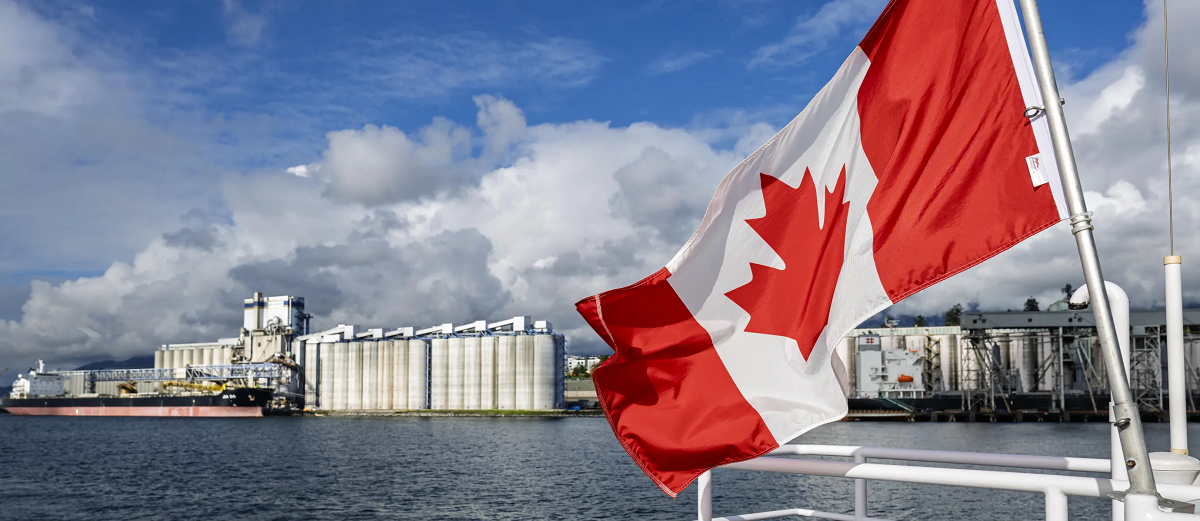
(Port of Vancouver photo)