
Over four in 10 (44%) agri-businesses are facing higher costs and supply disruptions for critical inputs like fertilizer due to shipping disruptions in the Strait of Hormuz, finds new data by the Canadian Federation of Independent Business (CFIB).
“High taxes, ongoing red tape, and rising energy costs are already straining Canada’s food supply. Now, the Strait of Hormuz-related disruptions are compounding the squeeze,” said Juliette Nicolaÿ, CFIB bilingual policy analyst. “Agri-businesses depend on imported, price sensitive inputs like fertilizer, so any delays or price spikes hit hard, especially during seeding and planting seasons.”
Canada’s agriculture sector is facing an entrepreneurial drought, with no new business entering the sector since the fourth quarter of 2022. In April, CFIB’s Monthly Business Barometer showed that confidence among Canada’s agri-businesses also remains near bottom of all sectors, at 53.3 points, reflecting the current challenging business environment.
In a recent letter sent to Agriculture and Agri-Food Minister Heath MacDonald, CFIB outlined three key priorities to strengthen agri-business competitiveness: lowering the total tax burden, reducing red tape and regulatory burden, and safeguarding property rights on agricultural land.
Most (90%) agri-businesses said they’re worried about the future of Canadian agriculture due to the regulatory burden, while nearly seven in 10 agri-business owners wouldn’t recommend starting a business in the sector due to red tape.
With the proposed Alto high-speed train, and other major projects, a quarter of agri-businesses (26%) also said they’re concerned with infrastructure projects threatening their property rights.
“Canada’s food supply is at risk, and losing agricultural entrepreneurs only makes it worse. Governments must protect farmland and work with farmers before introducing new environmental regulations, zoning changes or urban expansion initiatives,” said Christina Santini, CFIB director of national affairs.
CFIB is calling on the federal government to restore agri-business confidence and strengthen the sector’s competitiveness by:
• Reducing the small business tax rate from 9% to 6%
• Increasing the small business deduction (SBD) threshold to $700,000, and passive income amount to $70,000, and indexing them moving forward
• Implementing a two for one rule on new regulations
• Reducing red tape and improve service at the Canadian Food Inspection Agency
• Simplifying labour and Business Risk Management programs
• Modernizing the small business deduction and support succession planning
• Working with provinces to safeguard property rights on agricultural land.
“Agri-businesses need the certainty and support to compete and adapt to today’s economic challenges. With farms and producers playing such a crucial role in Canada’s economy, government must listen and act now to strengthen this key sector,” said Ms. Santini.
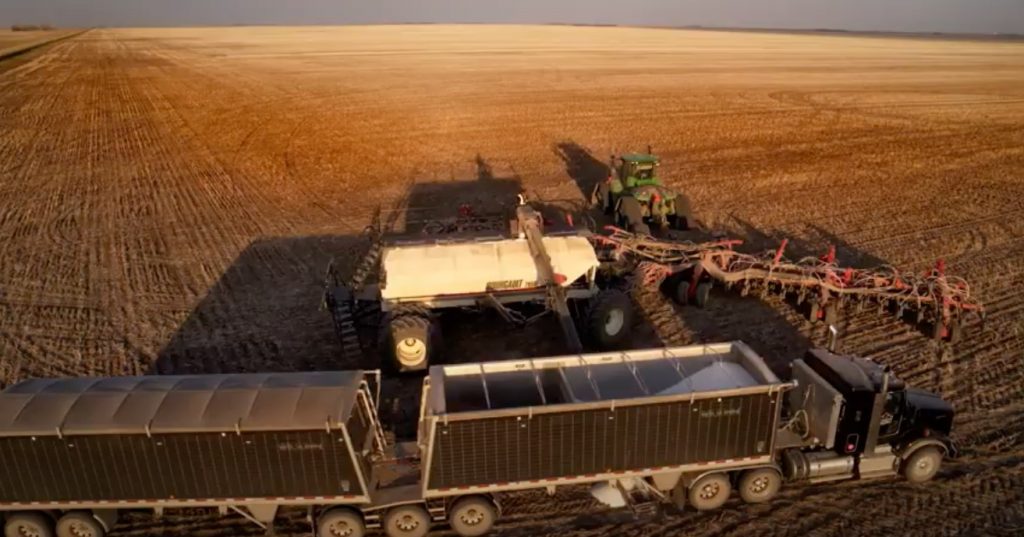
(Photo from Fertilizer Canada)