

By Michael Grey*

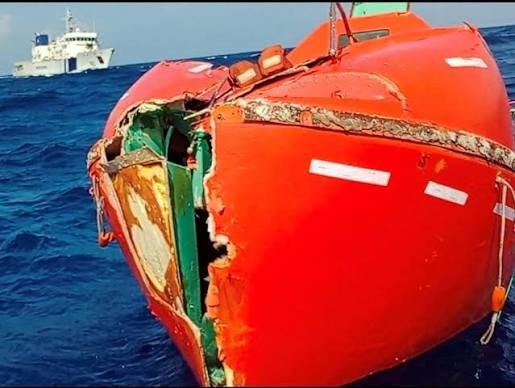
A ship which can charitably be thought of in the autumn of her days. A cargo known to be problematical and with which there will be no second chances should things turn nasty. Two life rafts and two survivors out of a crew of 24 after the vessel horrifyingly took reportedly just five minutes to vanish in the sea. The loss on August 22 of the bulker Ocean Winner in the Bay of Bengal brought back memories of those 1980-90s years, when bulker losses – mainly elderly ships which perished with their crews – were almost so routine that the mainstream media failed to even notice them.
We were supposed to have learned a lot since then, and to do the industry credit, much has indeed improved, such that these losses are now very rare. We learned about the sin of postponed maintenance and the need for continual inspection of hard worked and corroding structures. The industry faced up to the dangers of the port equipment bashing ships around like so much scrap iron. We had hoped that the loaders might have learned of the strains which could be put upon ship structures by an injudicious departure from the loading plan, just to get the ship away faster. And most important of all, bulk carriers have, over the intervening years, been exposed to far tighter inspection regimes and stronger regulations.
We were also supposed to have learned a lot more about the dangers of liquefaction, with cargoes liable to this problem being identified and proper precautions taken to ensure that the cargo was within transportable limits. But sadly, these particular problems have persisted, and new, well-found ships have been lost, occasioning regular warnings from the bulk carrier owners’ organisation Intercargo and the P&I clubs, of the continuing need for vigilance, independent testing, and a firm refusal to carry doubtful cargo.
But some problems have never entirely gone away, mostly revolving around human nature. Cargoes are still stored for shipment in some places where there is heavy rainfall, and pressure is still put on shipmasters to accept cargo that is inadequately tested for moisture content, with dodgy sampling and little confidence that the tests have been undertaken by somebody who does not have a vested interest in getting the ship away.
Masters in these places probably have nobody on their side, with all interests anxious to get the cargo aboard and the vessel to sea. The owner doesn’t want the ship blacked by the charterer or the terminal, the charterer is being screamed at by the consignee who needs the cargo desperately. There might be a supercargo involved, whose focus is expediting the operation. The agent, who in another age, might have been working for the ship, is simultaneously representing the charterer. The master could make waves, but knows his job is on the line. The P&I club could help, but somebody has to alert them. The alleged can tests might have been very selective, but who knew? Maybe all will be well.
Ocean Winner structural failure?
There is no evidence whatever that this sort of scenario had played out as the 73,000dwt Panama flag panamax Ocean Winner loaded her China-bound cargo in the Indian port of Paradip. But it is a fact that liquefaction has been a factor in a notable number of incidents in recent years, where large ships carrying these types of cargo have got into difficulties. Doubtless the flag state’s investigators will be considering this in due course.
That, and the possibility of a catastrophic structural failure, because there is no getting away from the circumstances that a 28 year old geared bulker might not be the optimum carriage for 71,000 tonnes of iron ore fines for an Indian ocean crossing in the monsoon period. The ship could have been in tip-top condition, maintained to an exemplary level by her several owners, but it would have been surprising, if three decades of hard wear had not registered on her structure. You do not, I was once told by a class surveyor of great experience, see fatigue, no matter how hard you scrutinise a piece of steel.
One hopes that we can learn something from this tragedy, although it might just result in underlining lessons that were learned in all those earlier, awful, losses. That would be a small positive, if nothing else.
(Photos from the Indian Coast Guard)
*Michael Grey is former editor of Lloyd’s List. This column is published with the kind permission of The Maritime Advocate.