
“Around 20,000 seafarers on vessels operating in the Middle East are facing a dangerous and highly uncertain security situation as the conflict in the region continues,” today indicated World Shipping Council President & CEO Joe Kramek. Multiple commercial vessels have been struck since the beginning of the conflict, including a container ship that was hit overnight.
“Several seafarers have already lost their lives. Seafarers are not part of this conflict, yet they are increasingly caught in its path. These are men and women who are simply doing their jobs at sea.”
“We share the IMO Secretary-General’s call for urgent action to ensure the protection of seafarers and respect for freedom of navigation – seafarers must not be targets.”
“Our thoughts are with the seafarers who have lost their lives, their families, and the crews still operating in the region under extremely difficult and dangerous conditions.”
“The safety of crews must remain the absolute priority. Ocean carriers are closely monitoring developments and making operational decisions based on the best available information and risk assessments, including pausing or rerouting services where necessary.”
“The Middle East sits at the crossroads of major global trade routes. Disruption in the region will ripple across global supply chains, with longer voyages, delays, and the rewiring of shipping networks to keep trade flowing,” Joe Kramek said.
In a related development, the Federal Maritime Commission in Washington said it is closely monitoring fuel and other emergency surcharges being introduced by ocean carriers amid the escalating security crisis around the Strait of Hormuz, and affirmed that emergency fees must still comply with U.S. shipping regulations.
In a statement, the FMC said it was reviewing new charges implemented by container lines responding to disruptions in the Gulf to ensure they comply with the Shipping Act of 1984.
“Under its statutory authority, the Commission ensures that rates, charges, and rules that common carriers have implemented as a result of the threats to commercial shipping in the Strait and neighboring waters do not violate the Shipping Act,” the FMC said.
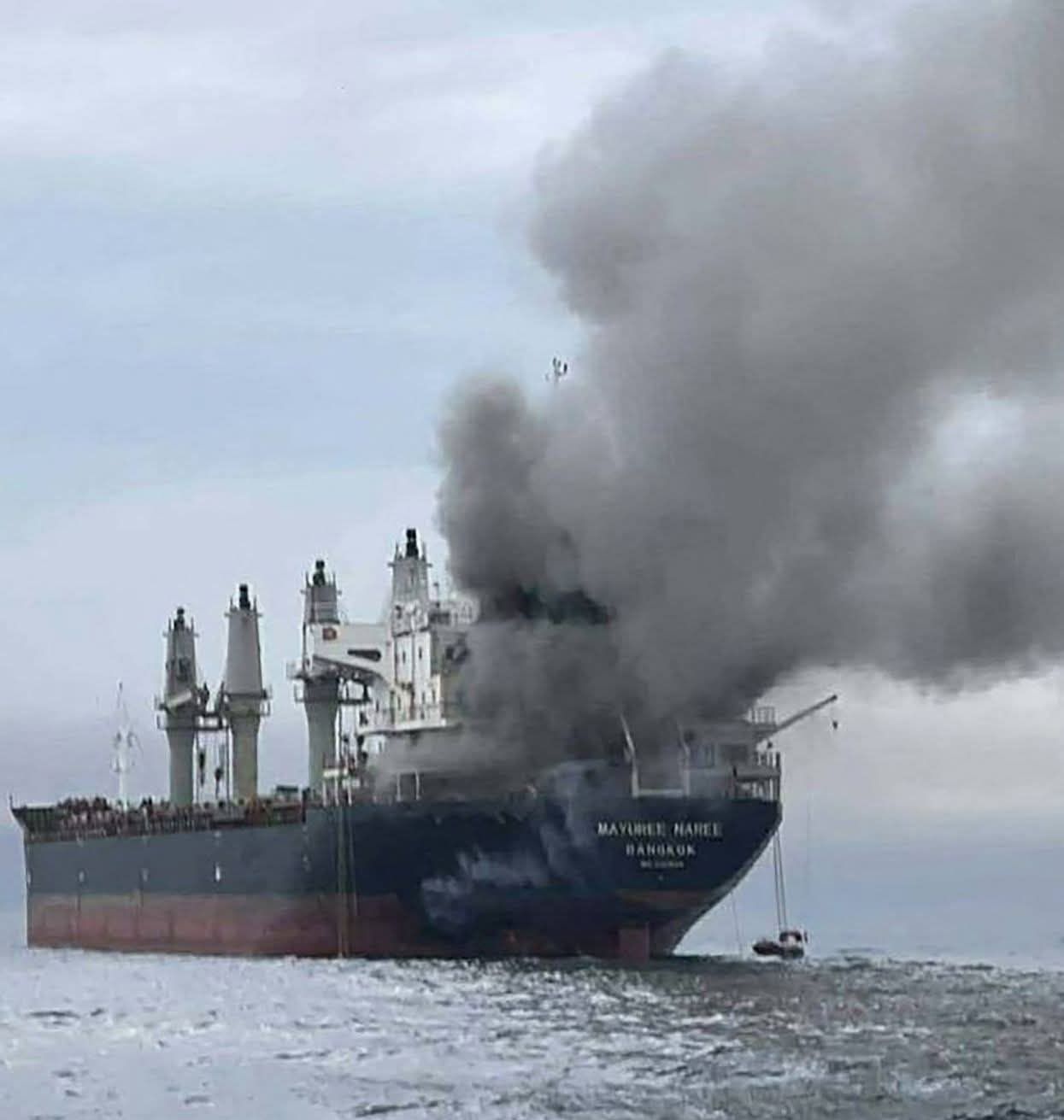
(Photo released by Royal Thai Navy of Thai bulk carrier attacked in Strait of Hormuz)