
According to a new analysis from consultancy Wood Mackenzie, under a worst-case scenario a prolonged closure of the Strait of Hormuz could trigger a global recession and propel oil prices towards $200 per barrel.
The consultancy noted that the fragile ceasefire between the US and Iran has brought some respite to the Middle East from intense military conflict. ”A durable peace agreement is proving elusive, however, and a prolonged closure of the Strait of Hormuz is now the greatest single risk to both energy markets and the global economy.”
More than 11 million b/d of Gulf crude and condensate production is curtailed right now due to the closure of the strait. Meanwhile, gas consumers around the world have lost access to over 80 Mtpa of LNG, equal to 20% of global supply.
The longer the Strait remains closed, the higher oil, gas and electricity prices will rise – and the greater the impact on energy demand and the global economy. Even once a peace agreement is reached, regional tensions are likely to persist, risking further damage to Gulf supply and intermittent disruption to the transit of oil, liquefied natural gas (LNG) and other commodities into the global market.
In a new Horizons report, Strait Talking: Iran War Scenarios and the Future of Energy, the consultancy laid out three possible scenarios: a rapid peace, a late-summer settlement, or disruption lasting through the end of 2026.
Under the most optimistic scenario, Hormuz reopens by June and the global economy largely returns to its pre-war trajectory by the fourth quarter. Brent crude would fall toward $80 per barrel by year-end and slide further to around $65 in 2027 as markets return to oversupply.
The “Summer Settlement” would keep the Strait largely closed until September, prolonging oil and LNG shortages through the third quarter and triggering a shallow global recession in the second half of 2026.
But if the Strait remains largely closed through the end of this year, Wood Mackenzie estimates Brent could approach $200 per barrel by the end of 2026, despite that global oil demand could plunge by 6 million barrels per day in the second half. Simultaneously, diesel and jet fuel prices could climb toward $300 per barrel.
The report suggests that the global economy could contract by as much as 0.4% in 2026. Hardest hit would be the Middle East, with regional GDP potentially declining 10.7%. European Union GDP would shrink 1.5% in 2026, whereas U.S. growth would fall below 1% in both 2026 and 2027.
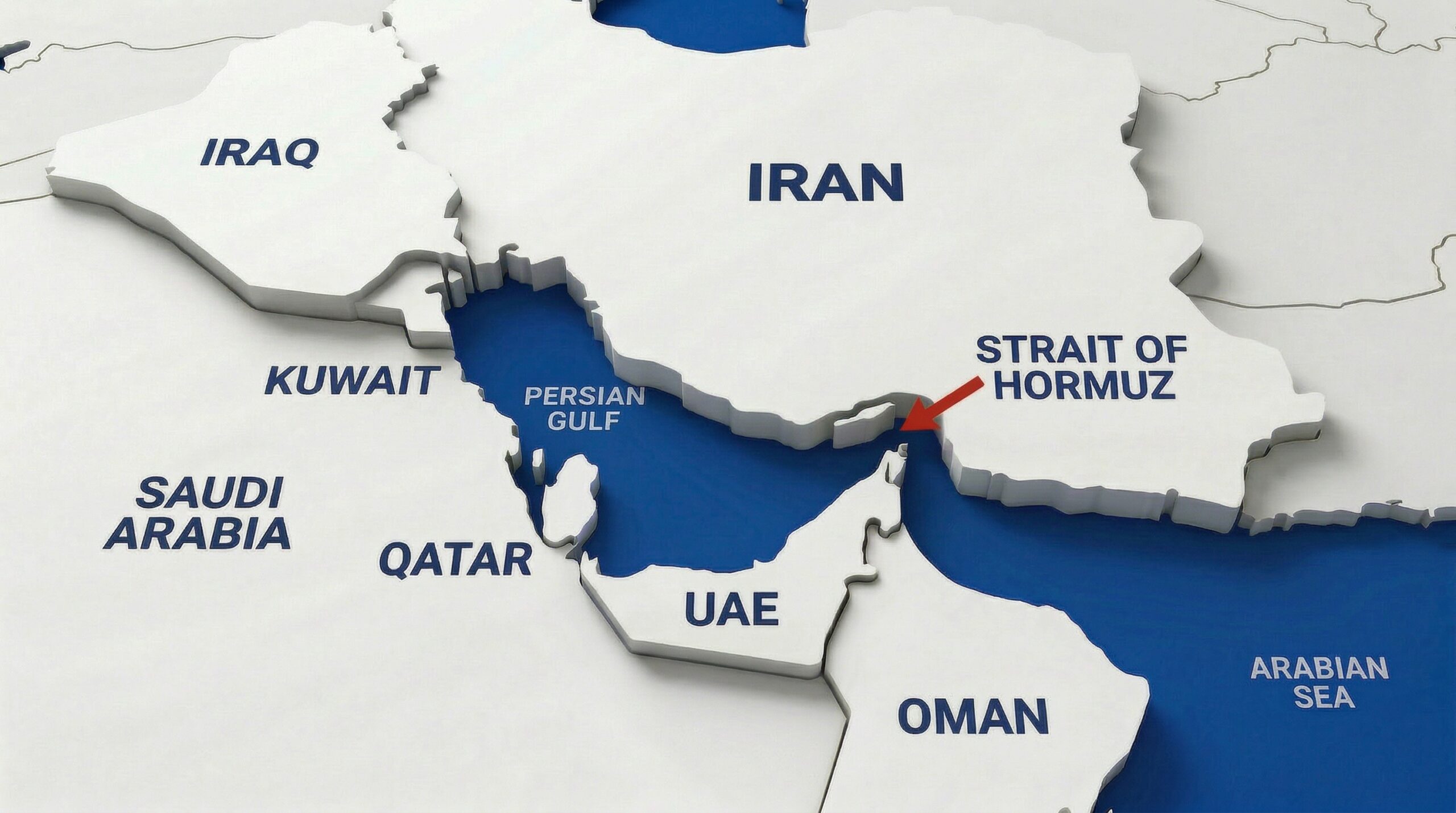
(Dreamstime image of the Strait of Hormuz)