
The transition to cleaner shipping took a major step forward as the Long Beach Board of Harbor Commission approved a first–of-its kind $1 million incentive to support commercial scale methanol bunkering at the Port of Long Beach.
The Clean Fuel Bunkering Challenge Incentive Award is designed to help move the maritime sector away from conventional dirty fossil fuels and toward cleaner alternatives capable of reducing harmful air pollution, better protect public health and cut climate emissions that contribute to rising temperatures and extreme weather events.
There are already more than 400 dual-fuel methanol vessels currently operating or on order globally and are expected to call at major ports such as Long Beach. However, many of these vessels continue to run on hazardous, health-harming conventional fuels due to the lack of available green methanol fuel infrastructure along the West Coast.
“Frontline communities in Los Angeles and Long Beach suffer from some of the worst pollution in the nation,” said Cristhian Tapia-Delgado, Climate Campaigner for Southern California, Pacific Environment. “We applaud the Port of Long Beach for approving $1 million to move ocean shipping lines to clean bunkering, but we urge the Port to do everything possible to ensure the cleanest, safest and most sustainable alternative fuels are the ones that achieve long-term success at the Port.”
The Port of Long Beach has long served as a national leader in deploying shore power infrastructure and advancing emissions-reduction technologies, and we must ensure this momentum continues as the next generation of cleaner vessels enters service. Achieving the Port of Long Beach’s goals of phasing out emissions from all seaport-related activities will require a large-scale transition to next-generation maritime fuels capable of achieving low- and near-zero greenhouse gas emissions.
“We know there is no single, magic fuel solution today, but methanol is emerging as one of the leading fuel alternatives in the maritime industry, said Davina Hurt, Climate Policy Director for Pacific Environment. “As this transition moves forward, shippers and the port must ensure that robust safety precautions must be in place to protect port workers and surrounding communities. At the same time, we urge shipping companies and the Port of Long Beach to carefully choose the cleanest and safest fuel today, choosing any type of methanol is short-sighted. Not all methanol pathways are equal, and long-term investments should focus on truly green methanol solutions that deliver the strongest climate and public health benefits.”
According to the ports’ own emission inventories, shipping remains the largest source of NOx emissions at the San Pedro Bay ports. The San Pedro Bay port complex — handling roughly 40% of all containerized U.S. cargo — is the largest single source of air pollution in the metropolitan region. Port-adjacent, working-class communities of color (like West Long Beach, Wilmington, and San Pedro) experience significantly elevated rates of asthma and up to eight years lower life expectancy due to disproportionate exposure to diesel pollution. The Port of Long Beach must send a clear signal to the maritime industry that the world’s cleanest fleets are welcomed and supported here — This $1 million dollar investment, if implemented correctly, is the first place to start.
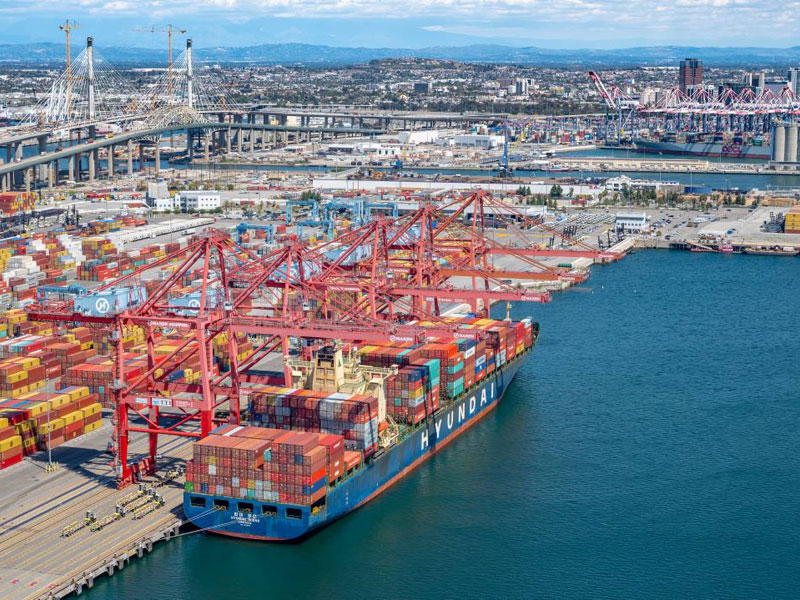
(Port of Long Beach photo)