
Import volume at major U.S. container ports is expected to remain below last year’s levels into early fall despite a skewed year-over-year bump in May and June, according to the Global Port Tracker report released today by the National Retail Federation and Hackett Associates.
“The numbers show a year-over-year increase for the next two months, but that’s only because of the sharp fall-off in imports after ‘Liberation Day’ tariffs were announced in April 2025,” NRF Vice President for Supply Chain and Customs Policy Jonathan Gold said. “With inflation rising and consumer confidence falling among global economic uncertainty driven by the conflict in Iran, the overall trend of lower imports is expected to continue after that.”
Amid ongoing economic uncertainty, Hackett Associates Founder Ben Hackett said retailers have been cautious about building up inventories.
“Containerized imports in the first quarter were down year over year, and forward demand is weakening,” Hackett said. “Stalling re-stocking efforts and rising geopolitical tensions are increasingly clouding the outlook.”
U.S. ports covered by Global Port Tracker handled 2.16 million Twenty-Foot Equivalent Units — one 20-foot container or its equivalent — in March, the latest month for which final data is available. That was up 0.6% year over year and up 13.6% from February, when many Asian factories were closed for Lunar New Year celebrations and bad weather delayed the arrival of cargo at some U.S. ports.
Ports have not yet reported April numbers, but Global Port Tracker projected the month at 2.13 million TEU, down 3.6% year over year. May is forecast at 2.17 million TEU, up 11.1% year over year; June at 2.13 million TEU, up 8.2%; July at 2.2 million TEU, down 7.8%; August at 2.19 million TEU, down 5.5%, and September at 2.08 million TEU, down 1.3%.
Those numbers would bring the first half of 2026 to 12.59 million TEU, up 0.5% from the same period in 2025 thanks, in part, to the May-June increases.
Imports totaled 25.4 million TEU in 2025, down 0.3% from 25.5 million TEU in 2024.
Global Port Tracker, which is produced for NRF by Hackett Associates, provides historical data and forecasts for the U.S. ports of Los Angeles/Long Beach, Oakland, Seattle and Tacoma on the West Coast; New York/New Jersey, Port of Virginia, Charleston, Savannah, Port Everglades, Miami and Jacksonville on the East Coast, and Houston on the Gulf Coast.
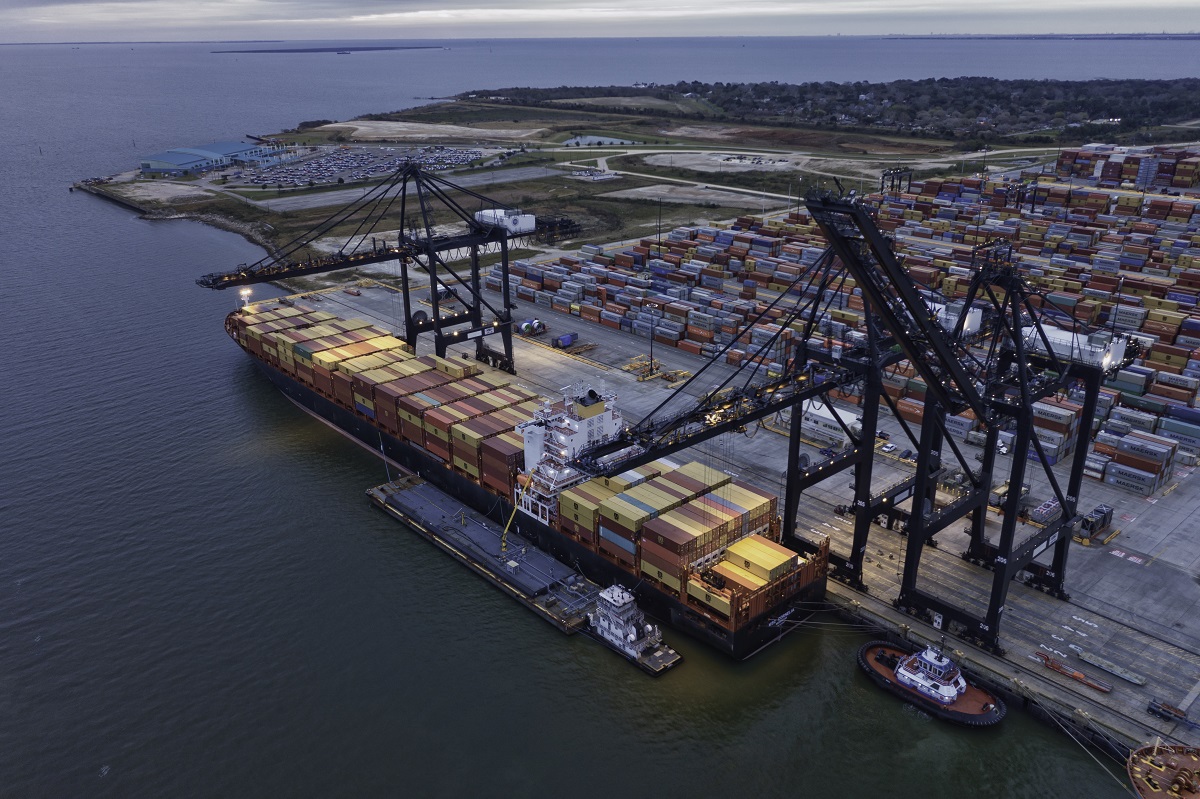
(Port of Houston photo)