

London – The International Maritime Pilots’ Association (IMPA) has called attention to the consequences of deregulation and competition in maritime pilotage, highlighting that it is a public, not commercial, service that exists for the safety of navigation, protecting people, the environment and trade.
The Association believes decision-makers need to understand that deregulation and competition are not sound policies in pilotage and expose the public and the shipping industry to unnecessary and avoidable risk. Where deregulation and competition have been introduced, we see increasing costs, reductions in safety and efficiency.
“In the worst cases, we see systems that fail to adequately protect the public,” said Captain Simon Pelletier, President of IMPA.
“To capture the economic, social and environmental benefits from maritime pilotage, governments must create the right environment. This is what the overwhelming majority of jurisdictions do. The few jurisdictions that have introduced deregulation and competition need to change course.”, he added.
According to IMPA, in one jurisdiction where competition in service-delivery was introduced, pilotage fees have doubled since 2018, while the incident rate per port call is 41 times the international average. In another, 60% of maritime safety incidents under pilotage occur in areas where providers compete against one another to provide the service.
In another, the main provider’s efficiency has declined by 9%, and the service’s ability to meet total demand has been compromised. In another, deregulation and government profiteering, in combination with a dilution of training and licensing standards, make it hard to say the service is pilotage.
Deregulation and competition are incompatible with high-performing pilotage systems, IMPA concludes.
Jurisdictions such as the European Union, Alaska, and Florida explicitly restrict competition to protect public interest. Competition threatens pilots’ professional independence and can lead commercial providers to underinvest in training and safety. Replicating infrastructure across multiple operators increases costs, risks under-provision, and often necessitates government intervention—ironically, deregulation creates more need for oversight. A well-regulated pilotage system delivers substantial benefits: a 2023 economic study found that every $1 invested yields $60 in safety and efficiency gains. Deregulation and competition jeopardize these benefits, undermining both safety and cost-effectiveness.

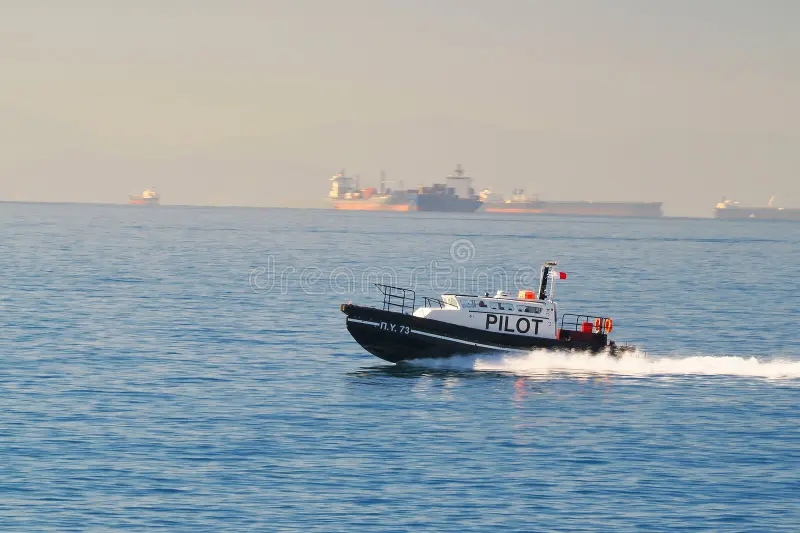
(IMPA photo of Simon Pelletier and pilot boat photo by George Stamalis, Dreamstime)