
A U.S.-Iran agreement jointly announced Sunday to end months of conflict in the Persian Gulf has been welcomed by maritime organizations, though they cautioned that important security and operational questions remain unresolved, including the threat of mines. The agreement ending hostilities, lifting the U.S. blockade of Iranian ports and reopening the Strait of Hormuz is to be formally signed in Geneva on Friday.
“The statements by the US and Iran are currently unclear and do not offer sufficient information regarding key aspects such as timings and safe routes,” said Jakob Larsen, Chief Safety & Security Officer at BIMCO.
“Due to lack of details and a history of overly optimistic reassurances, we believe the security situation for the shipping industry remains volatile, and we still consider it very risky for ships to commence transits at this point. We advise shipowners to continue doing thorough risk assessments and appeal to all parties to put the safety of seafarers first.”
“Ideally, the concept for resumption of maritime traffic would be directed by a neutral body like the UN. Such a concept would clarify matters such as safe routes, measures to separate traffic, sequencing of ships leaving the Gulf, reporting procedures, ship security procedures, procedures for naval protection and emergency response.”
Mr. Larsen continued: “The next step is for shipowners to be reassured that transiting the Strait of Hormuz is not only permitted but also safe. Ships trapped in the Persian Gulf will be interested in leaving as soon as it is safe to do so. This must be done in a coordinated manner due to the confined nature of the Strait.
“The threat of mines in the area remains a concern immediately as well as further down the line and mine-free routes need to be established. Credible assurances from both sides of the conflict must be given before traffic can resume fully to pre-conflict levels.”
Some industry reports suggest that scouring the Strait for mines could take weeks.
Niels Rasmussen, Chief Shipping Analyst at BIMCO, added: “According to Kpler, 600 ships remain trapped in the Persian Gulf, including around 250 tankers. We expect it will take several weeks for all ships to leave the Persian Gulf. We have seen an increase in ships transiting the strait last week, however, there is no indication that the announcement of an agreement has changed the situation yet.”
Toll on seafarers
The International Chamber of Shipping (ICS) welcomed the agreement while singling out the humanitarian toll the conflict has taken on seafarers.
“This announcement comes as a relief to the 20,000 seafarers who have been caught in the middle of this war,” said ICS Secretary General Thomas Kazakos.
“Their safe departure from the region must be a top priority but will take time.”
Mr. Kazakos said roughly 500 ships still need to transit the Strait to leave the region and called for close coordination between governments, industry stakeholders and the International Maritime Organization (IMO).
“The fundamental principle of freedom of navigation has been sidelined during the war, and many seafarers have regrettably been injured or lost their lives,” he said. “As we now hopefully move towards peace, we must see a permanent return to vessels being able to pass through the Strait of Hormuz unimpeded without paying a toll or other clearance mechanism.”
IMO Secretary-General Arsenio Dominguez said the agreement would allow the U.N. agency to move forward with plans to evacuate thousands of seafarers stranded in the region, though he cautioned that implementation would require time to ensure the necessary safety and security guarantees are in place.
“The Organization is working in close collaboration with Member States and partners to implement this plan safely and effectively,” the IMO said.
According to the agency, at least 46 attacks against international shipping have been verified in and around the Strait of Hormuz since the conflict began on February 28.
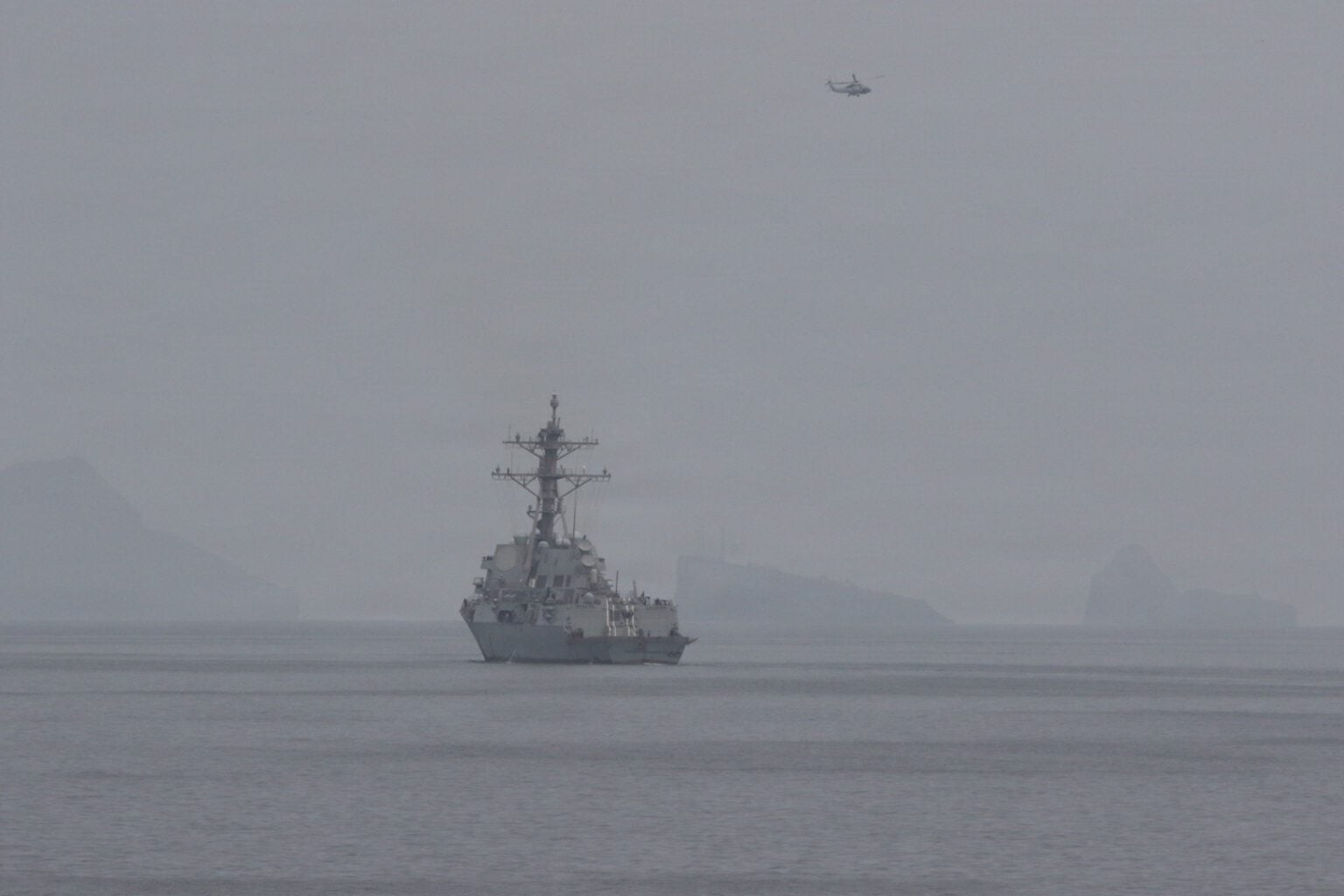
(Photo from US Central Command)