
With just two weeks to submit a plan for cutting black carbon emissions in the Arctic, International Maritime Organization member states – led by Arctic governments – should take the lead from a high-level announcement made by several governments – including Canada – at COP30 on sectoral action to tackle black carbon emissions from commercial and residential energy and transport sources.
“Addressing black carbon offers a unique opportunity to advance climate change mitigation, build climate resilience, improve air quality, safeguard public health, and deliver sustainable development co-benefits”, said the statement by Canada, Chile, Colombia, Costa Rica, Dominican Republic, Madagascar, Nigeria, Sri Lanka, Uganda.
The December 5th deadline for proposals on polar fuels, ahead of a meeting of the IMO’s Pollution Prevention and Response committee (PPR 13) in February 2026 in London that will set rules on what fuels can be used in the immediate future by shipping in the Arctic, is fast approaching.
The momentum for this important decision is building: the Nordic Council of Ministers recently recommended that Nordic governments work towards the recognition of polar fuels by the IMO and the MARPOL Convention. Now, during COP30, governments have again recognised the need for urgent action on a potent, short-lived superpollutant where action now could make a real difference in mitigating the impact of climate change and also improve air quality and public health for communities in the Arctic.
“As this announcement from COP30 shows, the world is starting to take urgent action on black carbon emissions – we need Arctic governments to take action ahead of the IMO’s December 5th deadline, in order to dramatically reduce black carbon emissions from Arctic shipping”, said Dr Sian Prior, Lead Advisor, of the Clean Arctic Alliance. “By making cleaner fuels (polar fuels) mandatory for shipping in this unique region that is already being dramatically affected by climate change, Arctic governments – and other IMO member states – have a unique opportunity to demonstrate joint leadership on this issue”.
“Black carbon is one of the longest, unresolved issues running at the IMO, and must now be dealt with without delay”, said Mr. Prior. “The International Maritime Organization (IMO) has spent more than a decade on scientific analysis and discussions, but black carbon emissions from Arctic shipping remain unregulated. The next opportunity comes in February 2026, when the IMO’s Sub-Committee on Pollution Prevention and Response will meet (PPR 13) to discuss polar fuels.”
“A strong agreement on polar fuels to set rules which will reduce black carbon emission levels from shipping in the Arctic region is essential”, added Mr. Prior. “The deadline for submitting proposals is December 5th – and we want to see a concrete proposal led by Arctic states, including Canada, Norway, Iceland, Denmark/Greenland, on polar fuels that will ensure a rapid reduction in Arctic black carbon emissions, ahead of longer-term decarbonisation efforts.”
A regulation requiring the use of polar fuels in the Arctic must set the foundation in MARPOL Annex VI (International Convention for the Prevention of Pollution from Ships) for reductions in emissions which reduce the impact of black carbon on the Arctic.
A recent report by NGO Pacific Environment lays out the case for why the International Maritime Organization (IMO) should immediately act on reducing black carbon pollution — a climate super-pollutant. On Thin Ice: Why Black Carbon Demands Urgent Action, explores how the expansion of Arctic shipping is causing an increase in the release of black carbon into the air, which then settles on snow and ice, accelerating dangerous melting. Switching to readily available and cleaner “polar fuels” — such as marine distillates DMA and DMZ or new fuels with comparable black carbon emissions levels — will rapidly cut emissions, protect vulnerable ecosystems and safeguard communities.
About Black Carbon and Polar Fuels
Black carbon is a short-lived climate pollutant, produced by the incomplete burning of fossil fuels, with an impact more than sixteen hundred times that of CO2 over a 20 year period. It makes up around one-fifth of international shipping’s climate impact. Not only does it contribute to warming while in the atmosphere, black carbon accelerates melting if deposited onto snow and ice – hence it has a disproportionate impact when released in and near to the Arctic.
The melting snow and ice exposes darker areas of land and water and these dark patches then absorb further heat from the sun and the reflective capacity of the planet’s polar ice caps is severely reduced. More heat in the polar systems – results in increased melting. This is the loss of the albedo effect.
The need to reduce emissions of black carbon because of both the climate and health impacts has been long recognised. On land, considerable effort has been made to ban dirtier fuels in power stations, to install diesel particulate filters on land-based transport, and to improve the burning of dry wood – all to reduce emissions of black carbon and improve air quality. However, at sea the same efforts have not yet been made.
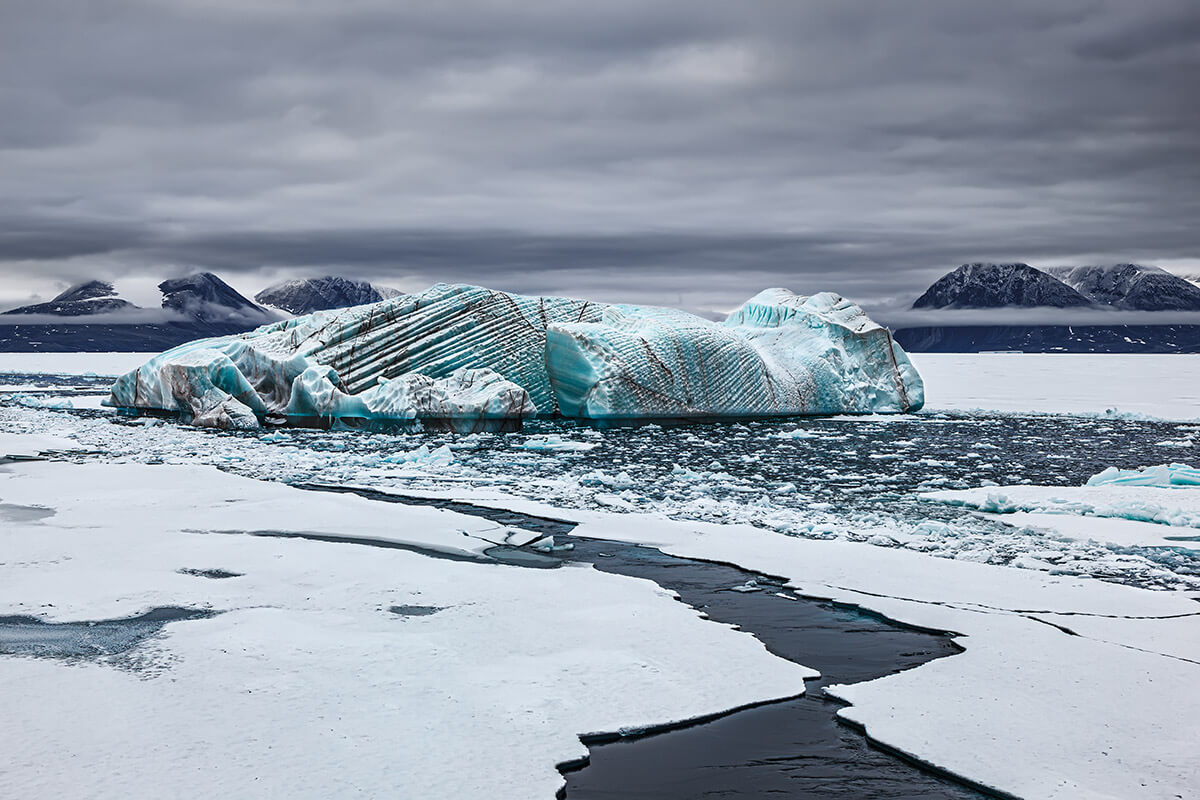
(Photo from Clean Arctic Alliance)