
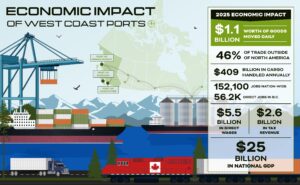
Canada’s west coast ports are playing a crucial role supporting national trade objectives and generating economic prosperity, supporting more than 150,000 Canadian jobs while moving $1.1 billion in goods every day.
The Economic Impact of West Coast Ports study, released today, found B.C.’s maritime gateways at the ports of Vancouver, Prince Rupert and Nanaimo serve as the backbone of Canada’s international trade, facilitating the flow of goods that sustain national and provincial prosperity.
The three ports handled more than 200 million metrics tonnes of cargo in 2025 worth $409 billion, moving record volumes of what Canadians make, mine, harvest and grow to global customers in more than 170 overseas markets.
They handle a diverse mix of cargo, supporting the movement of everything from bulk exports of Canadian energy, forestry products, potash, grain and critical minerals to two-way container trade and imports of Asian-made vehicles, manufacturing parts and household necessities.
- Port of Vancouver: Located on B.C.’s southwest coast, the port comprises 29 major deep-water terminals and more than 1,000 tenants who move goods and people across five sectors (auto, bulk, breakbulk, container and cruise).
- Port of Prince Rupert: As Canada’s northernmost trade gateway on the west coast, the Port of Prince Rupert anchors one of the fastest and most reliable supply chains between North America and Asia, with 8 terminal and logistics facilities supporting over 7,900 jobs.
- Port of Nanaimo: Located 30 nautical miles from the Port of Vancouver, the Port of Nanaimo is an emerging Pacific gateway operating three deep-water terminals that support container, auto, bulk, breakbulk, cruise, and logistics services, connecting Vancouver Island to global markets and strengthening Canada’s trade and supply chain resilience.
B.C.’s west coast ports offer North America’s best access to Indo-Pacific markets that are on track to account for 50% of global GDP by 2040. This includes strong inland road and rail links across Canada, and unimpeded ocean access to the Indo-Pacific with North America’s fastest shipping times.
The study also found the ports helped enrich neighbouring local and First Nation communities through job and procurement opportunities, partnerships and support for local events, and environmental stewardship.
The Economic Impact of West Coast Ports study was prepared by InterVISTAS for the Vancouver, Prince Rupert and Nanaimo port authorities, the BC Maritime Employers Association (BCMEA), and the BC Marine Terminal Operators Association.
“West coast ports like Vancouver have an outsized role to play as Canada looks to double exports to non-U.S. markets over the next 10 years in support of a thriving national economy,” said Peter Xotta, President and CEO, Vancouver Fraser Port Authority. “With game-changing projects like Roberts Bank Terminal 2 on the horizon and a new federal Port of Vancouver Gateway Strategy in the works, we are poised to unlock one of our country’s greatest trade opportunities: the Indo-Pacific.”
Kurt Slocombe, President and CEO, Prince Rupert Port Authority, declared: “West coast ports are integral to supporting Canada’s trade goals, and with $3 billion in projects underway, the Port of Prince Rupert is expanding capacity while supporting diversification. The Port of Prince Rupert will continue to be a key gateway to support Canada’s goal of doubling non-US exports with logistics hubs like CANXPORT and LinX coming online, the largest natural gas liquids facility on the west coast (the Ridley Island Energy Export Facility) currently under construction, along with additional port infrastructure such as new marine berth and rail capacity.”
Ian Marr, President and Chief Executive Officer, Nanaimo Port Authority, commented: “The economic impact highlighted in this study demonstrates that ports are more than places where cargo moves. They are platforms for economic growth, trade diversification and national resilience. As Canada looks to strengthen its trade corridors and expand access to global markets, strategic investments in infrastructure, industrial development and transportation connectivity will be essential. Nanaimo has an important role to play in supporting a stronger, more competitive and more connected Canadian economy.”
Mike Leonard, President & CEO, BC Maritime Employers Association, said: “Canada’s West Coast ports are a strategic national asset, connecting Canadian businesses to global markets and supporting thousands of family-sustaining jobs. Through the Pacific Gateway, our members—marine terminal operators, shipping lines and agents—help ensure the safe and efficient movement of goods. As global trade evolves, a stable, reliable waterfront and resilient national supply chains will be essential to unlocking new economic growth, diversifying trade and keeping Canada competitive.”
Stephanie Jones, BC Marine Terminal Operators Association (BCMTOA), stated: “BC’s terminal operators are an integral part of Canada’s transportation network, facilitating the movement of cargo and passengers through Canada’s trade corridors. This report outlines the essential role terminals play in connecting the communities surrounding ports to the Canadian economy, and the critical function of BC’s transportation infrastructure in meeting our national trade objectives. Resilient, competitive supply chains are vital to attract investment and ensure Canada’s long-term economic growth.”
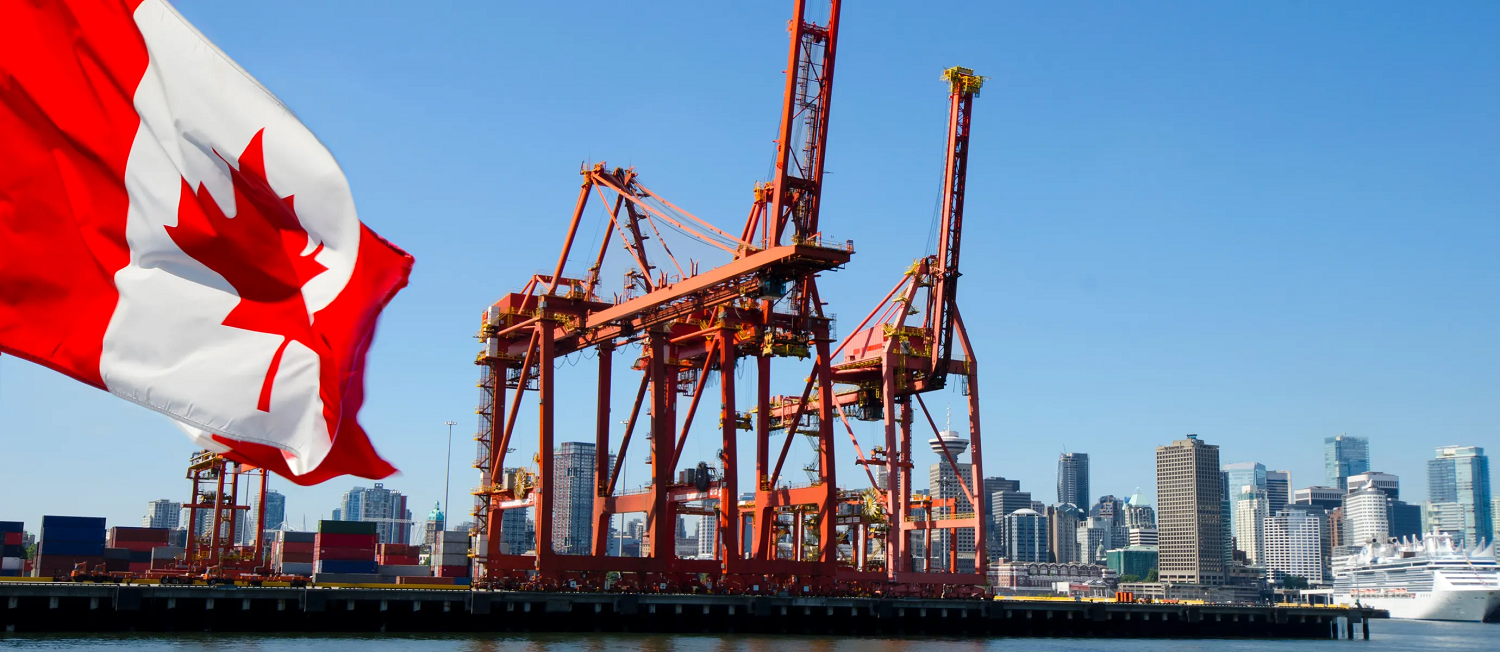
(Photo of Vancouver harbour from VFPA)