

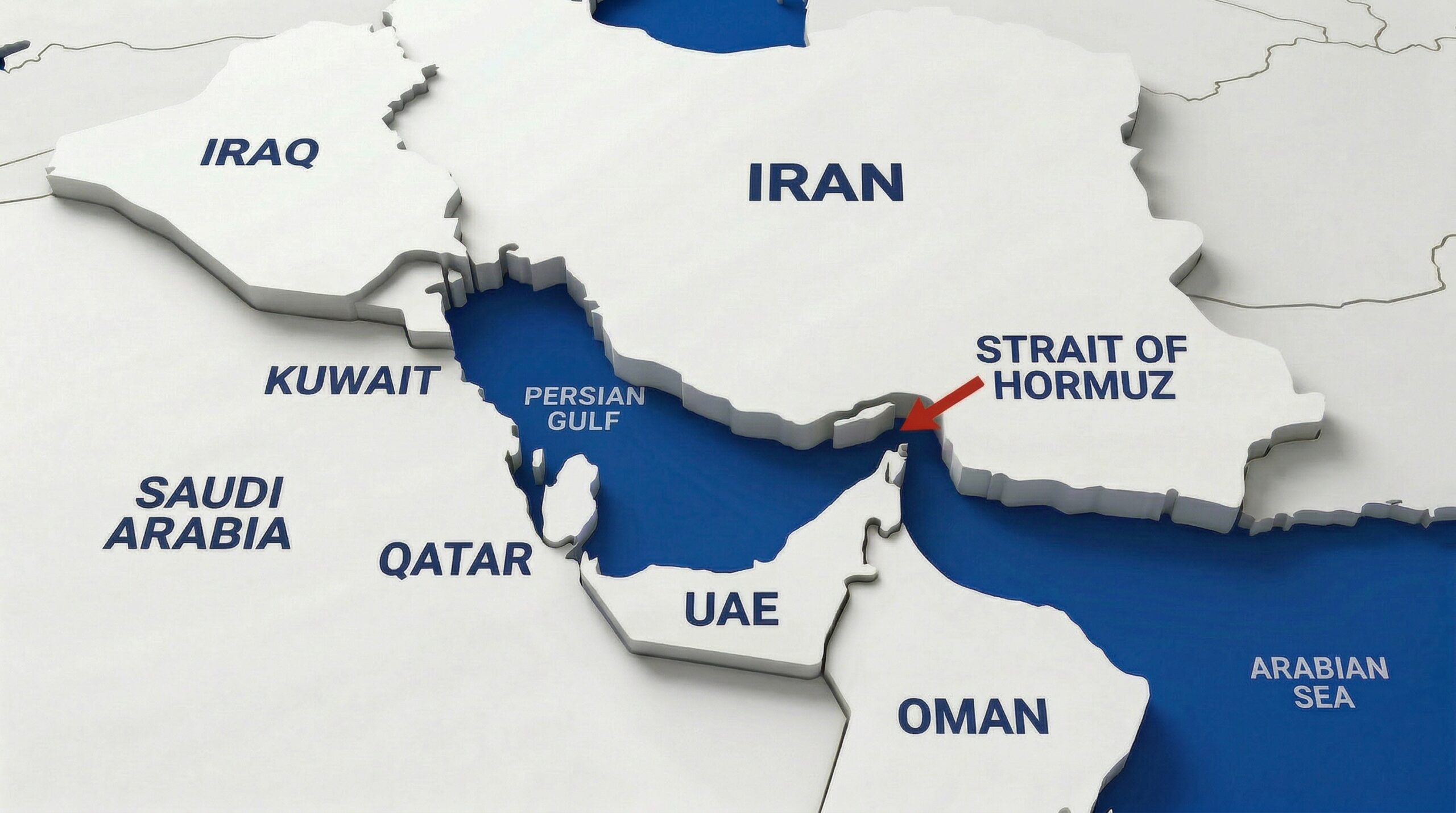
In its latest Oil Market report, the International Energy Agency warns that the ongoing conflict in the Strait of Hormuz is triggering one of the largest oil market shocks in modern history. The IEA forecast world oil demand to decline by 420,000 barrels per day year-over-year in 2026 to 104 million barrels per day. This represents a sharp reversal from pre Iran war expectations.
The agency said the biggest hit could come during the second quarter of 2026, when global demand is projected to plunge by 2.45 million barrels per day compared to 2025 – led by steep declines in petrochemicals and aviation.
At the same time, global oil supply has collapsed as the conflict surrounding Iran and the Strait of Hormuz continues to choke off exports from the Gulf.
Global oil supply declined by a further 1.8 mb/d in April to 95.1 mb/d, taking total losses since February to 12.8 mb/d. Output from Gulf countries affected by the closure of the Strait of Hormuz was 14.4 mb/d below pre-war levels.
Higher production and exports from the Atlantic Basin provide some relief. Assuming flows through the Strait gradually resume from June, global oil supply is projected to decline by 3.9 mb/d on average in 2026, to 102.2 mb/d.
Plugging the gap
More than ten weeks after the war in the Middle East began, mounting supply losses from the Strait of Hormuz are depleting global oil inventories at a record pace. Benchmark oil prices have posted wild swings in response to conflicting signals on whether the United States and Iran will soon reach a deal to end the conflict, with North Sea Dated plunging from a high of $144/bbl to below $100/bbl before rebounding again. At the time of writing, the two countries remained at loggerheads over an accord to reopen the Strait and end the war, with North Sea Dated around $110/bbl.
With Hormuz tanker traffic still restricted, cumulative supply losses from Gulf producers already exceed 1 billion barrels with more than 14 mb/d of oil now shut in, an unprecedented supply shock. The current supply-demand gap is significantly smaller, however, as the market was already in surplus heading into the crisis while producers and consumers alike are responding to market signals.
On the supply side, Saudi Arabia and the UAE have successfully redirected some exports to terminals loading outside of the Strait. At the same time, stocks from commercial and government strategic storage sites in consuming countries are flowing into markets to offset part of the losses. Observed global inventories, including oil on water, were drawn down by 250 mb over March and April, or 4 mb/d. Producers outside of the Middle East also pushed output higher and lifted exports to record levels in response to the crisis. Indeed, 2026 supply growth expectations from the Americas have been revised up by more than 600 kb/d since the start of the year, to 1.5 mb/d on average.
Moreover, Atlantic Basin crude oil exports, now heading primarily to hard-hit East of Suez markets, have increased by 3.5 mb/d since February, with notable gains from the United States, Brazil, Canada, Kazakhstan and Venezuela. Russia’s crude oil exports have also risen, as repeated attacks on its refineries have cut domestic use and led to higher shipments, while the United States temporarily waived sanctions on Russian oil on water.
On the demand side, refiners have reduced runs and sharply scaled back crude imports. Chinese seaborne crude imports fell by a massive 3.6 mb/d from February to April, according to Kpler. Major reductions in imports were also seen in Japan (-1.9 mb/d), Korea (-1 mb/d) and India (-760 kb/d). But while the slowdown in global refinery activity – by around 5 mb/d y-o-y in April – has temporarily eased tensions in the crude market, tightness is quickly spreading to product markets.
While demand may swing back to growth towards the end of the year if a deal to end the war is agreed that allows flows through the Strait of Hormuz to gradually resume from 3Q26, as is assumed in this Report, supply will likely be slower to recover. As a result, the oil market remains in deficit until the final quarter of the year. With global oil inventories already drawing at a record clip, further price volatility appears likely ahead of the peak summer demand period.
(Dreamstime image of Strait of Hormuz)