
While welcoming the signing of a U.S.-Iran memorandum of understanding three days ago, shipowners and industry groups underline the operational complications and security issues upon the planned reopening of the Strait of Hormoz, the world’s most important energy chokepoint.
Analysts consider that, at best, it will be a phased re-start and that it will take weeks to clear an enormous backlog.
The World Shipping Council described the agreement as “a positive development and an encouraging step toward restoring safety” in the Strait, but stressed that safe passage for ships and seafarers stranded in the region remains the immediate priority.
“That will require coordination between states, the IMO and industry, backed by the necessary safety and security guarantees,” said World Shipping Council President and CEO Joe Kramek. “Coordinated risk assessments, mine mitigation operations, and vessel traffic operations should be prioritized as part of these efforts.”
“This conflict has again shown why the fundamental principle of freedom of navigation must be respected and protected,” Mr. Kramek said. “Ships must be able to pass through the Strait of Hormuz safely, securely and without toll.”
Increasing industry concern was expressed over future administrative arrangements not interfering with the longstanding principle of free transit passage through international straits.
INTERTANKO Marine Director Phillip Belcher noted that the agreement stipulates that maritime services remain free of charge for 60 days, but wondered what happens afterward.
“The final outcome of these discussions must be a reinforcement of the central tenet that the Strait of Hormuz must remain free of charges and open to all in accordance with UNCLOS,” Mr. Belcher said.
BIMCO Chief Safety and Security Officer Jakob Larsen indicated that the central portion of the Strait remains unsafe for navigation.
“Iran and the U.S. have now agreed to permit transits through the Strait of Hormuz, but significant safety and security risks still persist,” Mr. Larsen said. “The central part of the Strait is mined and un-navigable, and only the inshore traffic zones close to Oman and Iran are reportedly free of mines.”
INTERTANKO said the clearing of mines must be a top priority. “First and foremost, clearing the main internationally recognised traffic separation scheme (TSS) of all mine threats must be a priority.”
Evoking the scale of the challenge, INTERTANKO stated: “If 550 ships are aiming to leave and a likely 60 ships per day would look to transit the Strait of Hormuz, then the existing routes are inadequate to handle this.”
Co-ordinating the reopening
BIMCO said the memorandum raises many unanswered questions, including safe routes, traffic separation measures, reporting procedures, naval protection arrangements and emergency response mechanisms.
“BIMCO expects an international coordination body to be established shortly to facilitate transits,” remarked Jakob Larsen, Chief Safety & Security Officer at BIMCO.
He warned that allowing hundreds of ships to depart simultaneously through narrow inshore traffic lanes could create serious navigational risks. “To avoid serious risks associated with an uncoordinated mass transit through the narrow inshore traffic zones, we encourage shipowners to consider waiting for further clarification and direction from the international coordination body.”
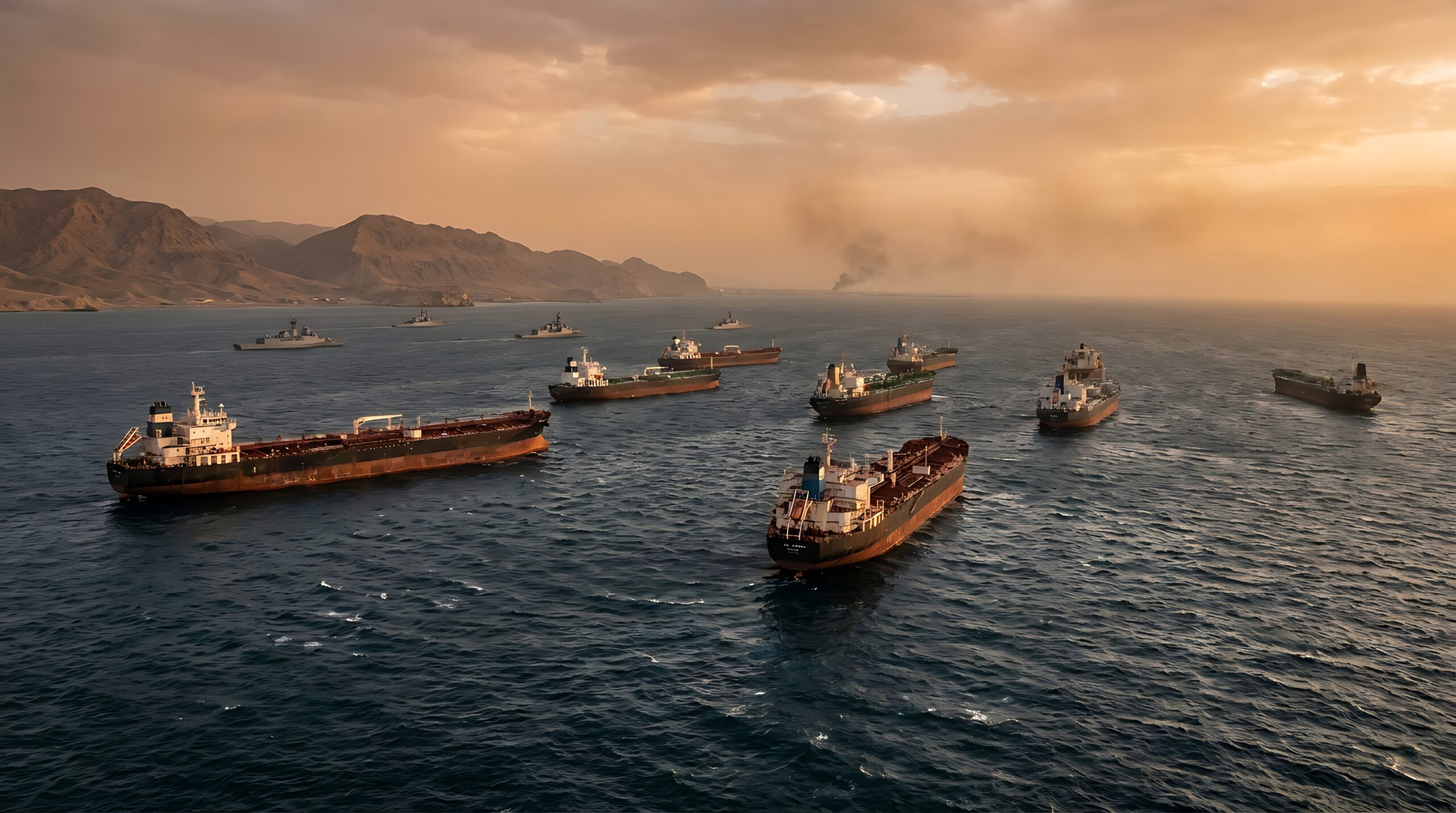
(Dreamstime image of Strait of Hormuz)