
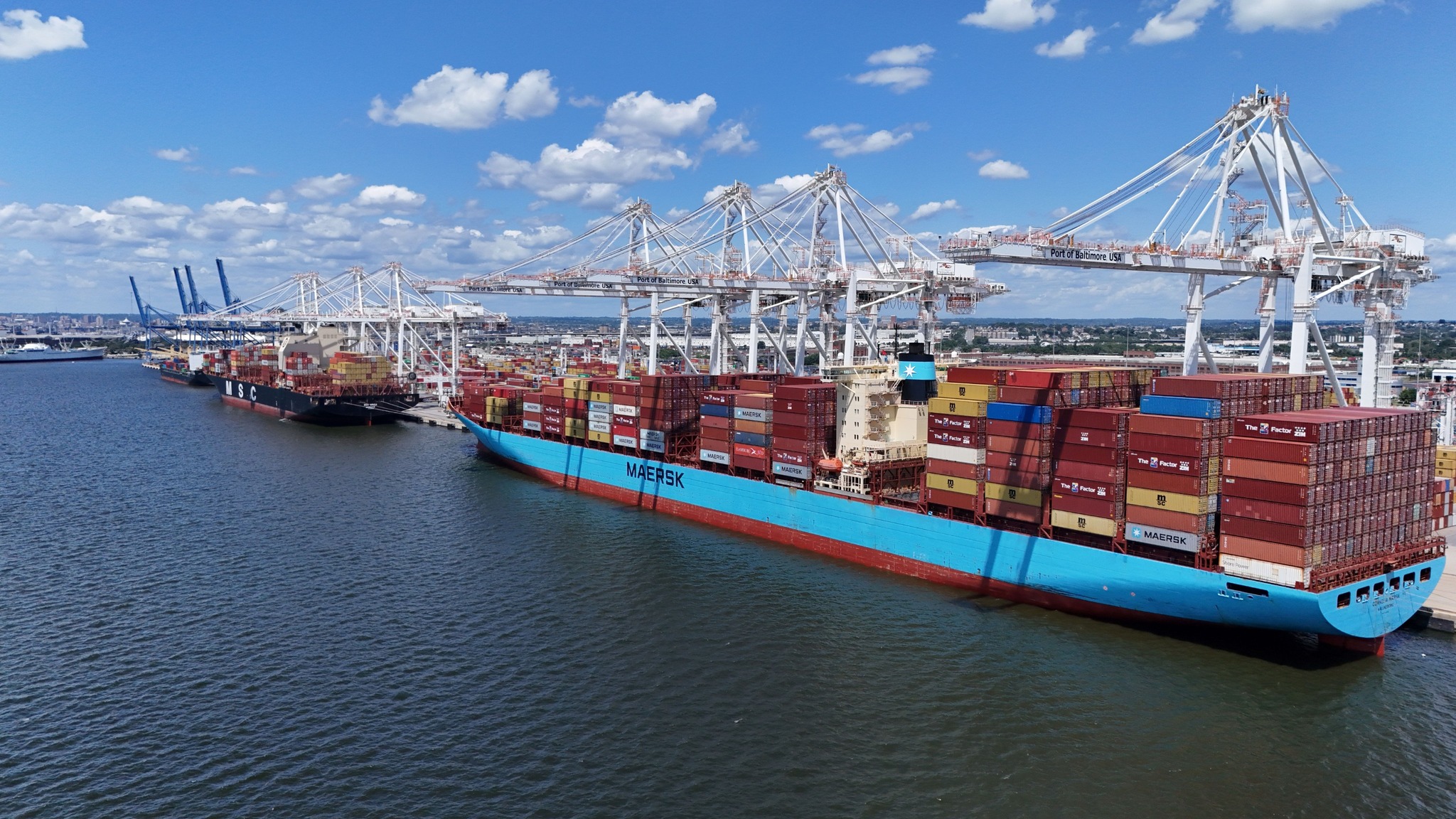
Maryland Governor Wes Moore has announced that the Helen Delich Bentley Port of Baltimore’s state-owned public and private marine terminals set new records for total cargo vessel visits and container activity in 2025. The record year follows the port’s historic recovery in 2024 following the Francis Scott Key Bridge collapse—an achievement made possible by the coordinated effort to clear the Fort McHenry shipping channel into the Port of Baltimore.
“The Port of Baltimore is a cornerstone of Maryland’s economy and one of the most important ports in the country,” said Gov. Moore. “We are grateful to the workers whose unwavering commitment and resilience made this progress possible. Our administration will continue to promote our port’s infrastructure to strengthen our supply chains, drive economic growth in our state, and create more good-paying jobs for our people.”
The Port’s state-owned public marine terminals, along with its private terminals, handled 2,223 cargo vessel visits in 2025, surpassing the previous record of 2,137 ships set in 2023. The 2025 total represents a 21 percent increase over 2024.
A new record of 1,113,309 twenty-foot equivalent units—the standard measurement for containers used to ship goods across the world—were moved through the Seagirt Marine Terminal last year, exceeding the 2023 record by more than 5,000. The gains coincided with an increase in weekly container services—regular, scheduled vessel routes—from 12 in 2024 to 15 in 2025.
“Our incredible terminal operators, International Longshoremen’s Association labor force, truckers, freight forwarders, and our other valued business and supply chain partners deserve full credit for a successful 2025 for the Port of Baltimore,” said Maryland Port Administration Executive Director Jonathan Daniels.
The Port’s container business is expected to grow further with the 2026 completion of the CSX Howard Street Tunnel Project, a $518 million initiative to modernize a 130-year-old freight tunnel in Baltimore. The new freight tunnel will allow the port to accommodate double-stacked container trains, increasing the Port’s capacity, while increasing competitiveness with regional ports—expanding potential business opportunities. The project is expected to increase the Port’s business by approximately 160,000 containers annually.
(Photo from Maryland Port Administration)