

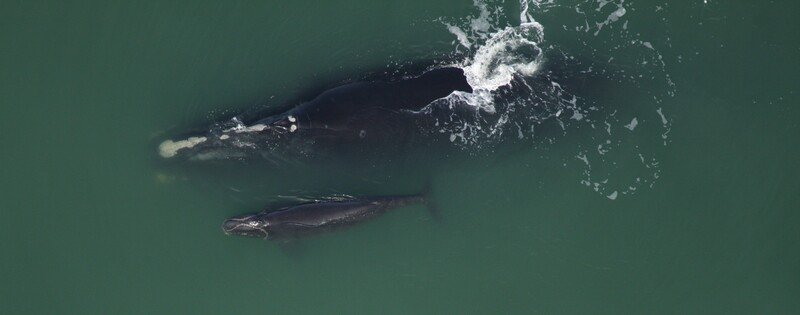
WASHINGTON— The Center for Biological Diversity sued the Trump administration today seeking records on a decision that would revoke vessel speed restrictions on the Atlantic coast that protect whales, including the critically endangered North Atlantic right whale, from deadly ship strikes.
The records would reveal which individuals, federal officials or industry groups may have influenced and lobbied for the decision to open the speed rule to “deregulation.”
“The public has a right to know who’s behind a government process that could condemn these whales to extinction,” said Kristen Monsell, oceans legal director at the Center for Biological Diversity. “Right whales are facing threats from all directions, and the speed rule is one of their few protections. Federal officials should be making decisions based on science and forward thinking, not industry cronyism and short-term profits at the expense of the ocean’s future.”
While the 2008 rule creating the speed limits needs strengthening, research has shown that it remains successful at cutting risks to whales significantly.
The Trump administration plans to replace the speed limit rule with unproven technological solutions that are not widely used and would never be an appropriate substitute for slowing down ships. Slowing down vessels is the only proven way to protect right whales from deadly vessel strikes. According to scientists, a vessel traveling at 10 knots or less is much less likely to kill a whale in a collision.
Only around 380 right whales remain, representing a 20% population decline over the past 25 years. Just 70 of those are reproductively active females. The North Atlantic right whale population began a sharp decline around 2010 as whales shifted habitats in a rapidly changing climate, bringing them into areas without protections from vessel strikes and accidental fishing gear entanglements.
Implemented in 2008, the speed limit rule establishes a seasonal 10-knot limit for most vessels 65 feet (the size of a school bus) and longer in “seasonal management areas” along the East Coast where the right whale’s feeding, calving and migratory patterns overlap with heavy vessel traffic.
“Dynamic management areas” are potential collision hotspots where NOAA Fisheries requests that vessels voluntarily slow to 10 knots. But many vessels do not comply, including in the species’ only known calving ground in the Southeast.
The Center submitted Freedom of Information Act requests in February to both the Department of Commerce and its subagency, NOAA Fisheries, regarding plans to roll back the speed rule, but has not yet received any response from either office. The law is meant to ensure public access to information about the functioning of federal agencies by guaranteeing a response within 20 business days of a request.
The Center has pushed for strengthening the speed limit rule by expanding seasonal management areas, applying speed limits to smaller vessels, and making compliance mandatory in dynamic management areas.
In January 2025 NOAA Fisheries announced that it was withdrawing a proposed rule that would have implemented these protections, after stalling on the proposal since 2022.
Today’s lawsuit was filed in the District of Maryland District Court. The Center expects to receive records from the suit within the next few months.
(Image from NOAA/FPWC)