
According to Filipe Gouveia, Shipping Analysis Manager at BIMCO, Chinese iron ore mining fell by 7% y/y in first half 2026 due to a 6% y/y increase in iron ore net imports and weaker steel production. ”The country is increasingly sourcing its iron ore from abroad because it is often of higher grade and competitively priced. Iron ore net imports now account for 57% of China’s iron ore supply compared to 50% in the first half of 2022.”
While China’s iron ore supply slightly increased in the first half of 2026, demand from steel mills weakened. Chinese steel production decreased 3% y/y while steel production from Basic Oxygen Furnaces, which accounts for most iron ore consumption, is estimated to have fallen by around 4% y/y. Consequently, iron ore inventories in Chinese ports remained elevated during the first half of the year.
“Demand for dry bulk ships transporting Chinese iron ore imports rose 9% y/y in the first six months of 2026 due to the rise in cargo volumes and an increase in average sailing distances. The developments strengthened the dry bulk market, especially the capesize segment, and added support to a 79% y/y increase in S&P Global Energy’s Platts Capesize T4 Index, a global index based on four key capesize routes. China’s iron ore imports account for 24% of global dry bulk ship demand and 59% of capesize ship demand, making it the world’s largest dry bulk importer,” says Mr. Gouveia.
Chinese imports of Australian and Brazilian iron ore rose 4% and 6% y/y and combined the two countries accounted for 83% of China’s imports. Furthermore, significant growth came from smaller exporters such as Guinea, Liberia and Peru. The average sailing distances from these exporters to China are longer than average.
The Simandou mining project in Guinea began exporting iron ore at the end of 2025. Volumes are expected to reach around 20m tonnes this year, with the majority heading to China, but could increase to 120m tonnes by the end of the decade. In Liberia, ArcelorMittal is targeting a 15m tonne increase in iron ore exports in 2026. Lastly, Peruvian exports were comparatively stronger during the second quarter of 2026 since the country faced port handling disruptions during the same period in 2025.
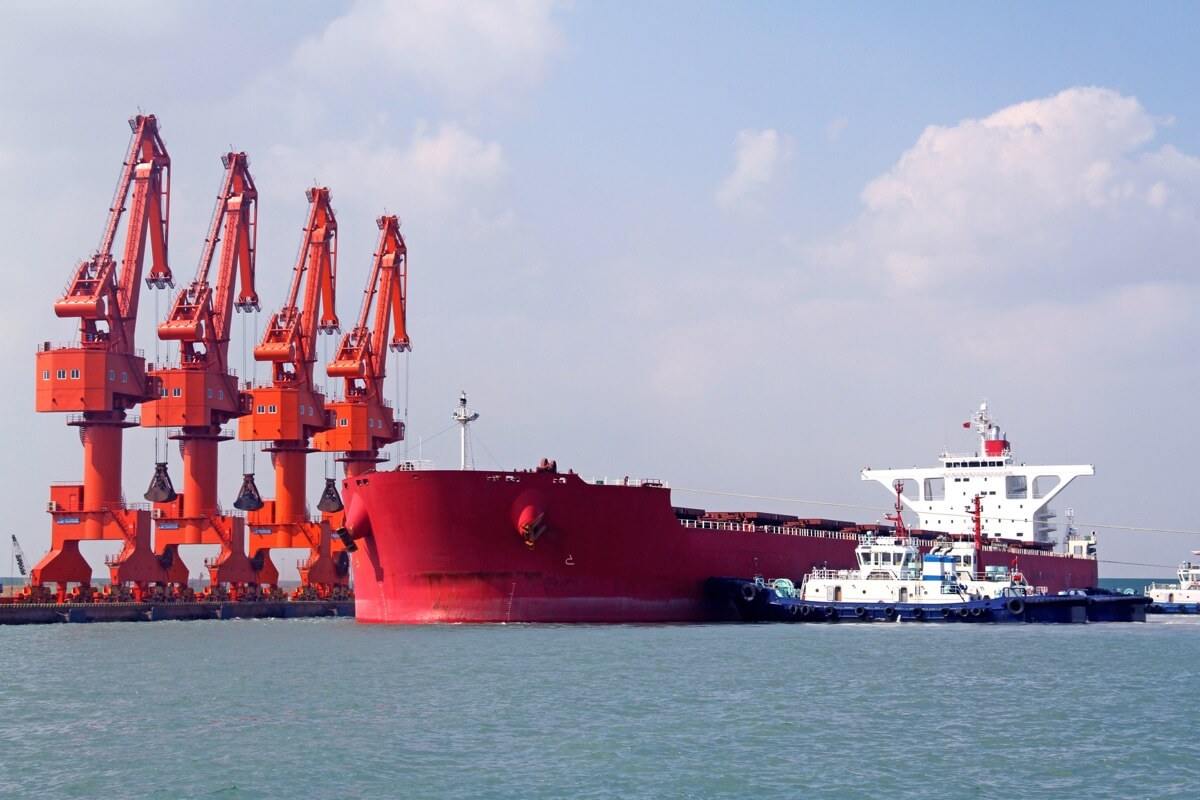
(Dreamstime photo of Port of Qingdao handling Australian iron ore)