The International Maritime Organization is stepping up efforts to prepare seafarers for the energy transition in maritime transport, in line with its strategy to reduce greenhouse gas emissions from ships.
The IMO has published general interim guidelines on the training of seafarers serving on ships using alternative fuels and new technologies ( STCW 7/Circ.25 ). These guidelines provide an international framework for the development and approval of training for seafarers serving on ships using alternative fuels and new technologies.
Interim fuel- and technology-specific training guidelines – including for methyl/ethyl alcohol, ammonia, hydrogen, LPG, battery-powered ships, and fuel cells – are also being developed. These will be considered by the IMO Sub-Committee on Human Element, Training and Watchkeeping in February 2026 (HTW 12).
These guidelines are expected to form the basis of mandatory requirements for seafarer training under the revised 1978 STCW Convention Code, currently being revised to support decarbonisation, digitalisation and other developments.
Developing capacities through technical support
Alongside regulations, the IMO is strengthening its support to Member States. Here are some examples of ongoing initiatives:
- A three-year project funded by Japan to train instructors from Asian countries in the operation of ships using LNG as fuel;
- A partnership with the World Maritime University to produce training materials for seafarers on alternative fuels, which also contributed to the Maritime Just Transition Task Force (MJTF) training frameworks , launched in September;
- Support for trainers from developing countries to produce locally adapted courses and online learning modules as part of the GreenVoyage2050 program;
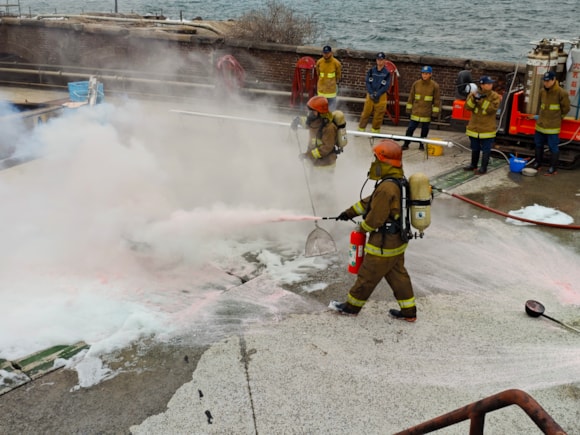
- Platforms to connect regulators and those working in the field, such as a recent seminar in Singapore showcasing innovations in practical training, ranging from simulators and VR tools to methanol firefighting drills.
(Photo from IMO)