
By Michael Grey*

There is an open season on merchant mariners at present, and not in a nice way, with the warring parties around the Strait of Hormuz accompanying their confusing messages with a willingness to fire into innocent merchant ships in international waters. At least twenty seafarers have been killed in these incidents, which scarcely show the various parties in any positive moral light. Only people with no sense of humanity would fire into a fully laden LNG carrier at point-blank range, or precisely guide their ordnance into the machinery space of a vessel navigating in a narrow waterway.
Of course, those with their fingers on their triggers will justify their action by claiming that the ship was not obeying their orders and will not be amenable to any reasoned arguments that taking lives can never be justified in such circumstances. And far beyond these dire straits, in the Black Sea, Sea of Azov and other waters where Russian and Ukrainian combatants grind on with their war of attrition, merchant mariners have been in their sights. Indeed, one might suggest that attacks on merchant ships have become normalised; legitimate targets as in earlier wars and those aboard, the non-combatants, can be dismissed as just collateral. In the Middle East, there is very little sign of any form of meaningful compromise, perhaps for the very real reason that none is available.
Absolute control of the waterway is Iran’s only trump card, which the hard-line factions in their administration are determined to retain. But to the US, the international community and indeed to the UN and its expert agency the IMO, the ceding of this important issue is totally unacceptable. It is as daft as the French or the UK being given exclusive rights over the English Channel; Malaysia or Indonesia requiring absolute control of the passage through the Malacca Strait, with the riparian state prepared to kill those who disobey their instructions.
Lives of seafarers seem secondary in diplomatic debates
Cave in to the Iranian demands and an appalling precedent will be established, but is this really understood by the US negotiators, who seem more fixated on the Iranian nuclear ambitions? And what of the prosperous states on the other side of the Gulf, which have been targeted by the Iranian missile bombardment to put pressure on the US? How resolute are they in their objections to their maritime trade being policed by the Iranian Revolutionary Guard Corps and the extraction of tolls for its access? And do the lives of seafarers really feature in the diplomatic debates, as they focus about commodity shortages and trade flows?
You might argue that there might be one single reason for the control of this international waterway. And that, of course, revolves around the safety of those ships passing through it, and the freedom from pollution on the coastal states which could result from any marine accident. It is why there is the internationally approved separation zone between the deep draught routes on the Omani side, which has been an effective safety measure in this teeming waterway. It has also served to keep traffic away from Iranian waters, with the risk of harassment from Iranian forces, which for years have been throwing their weight around. It is clear that the present situation, of conflicting messaging, and the constant risk of fatal attack, is not one that can be tolerated and the rights of innocent passage in an international waterway must be restored.
It might seem a long shot, but might some sort of face-saving resolution be worked around a jointly operated navigational safety organisation, with VTS stations and emergency services providing advice to ships in transit?
The close collaboration between UK and French authorities in the narrow seas between Dover and Calais is a perfect example. There are plenty of other successful examples around the world and the existing regional navigational agency, which maintains navigational aids throughout Gulf and near-Gulf waters could be a helpful template. Goodwill, presently in such short supply between potential participants would be a pre-condition. Throwing missiles at merchant ships is not the right step towards de-escalation and the desperate need to make these waters safer for seafarers.
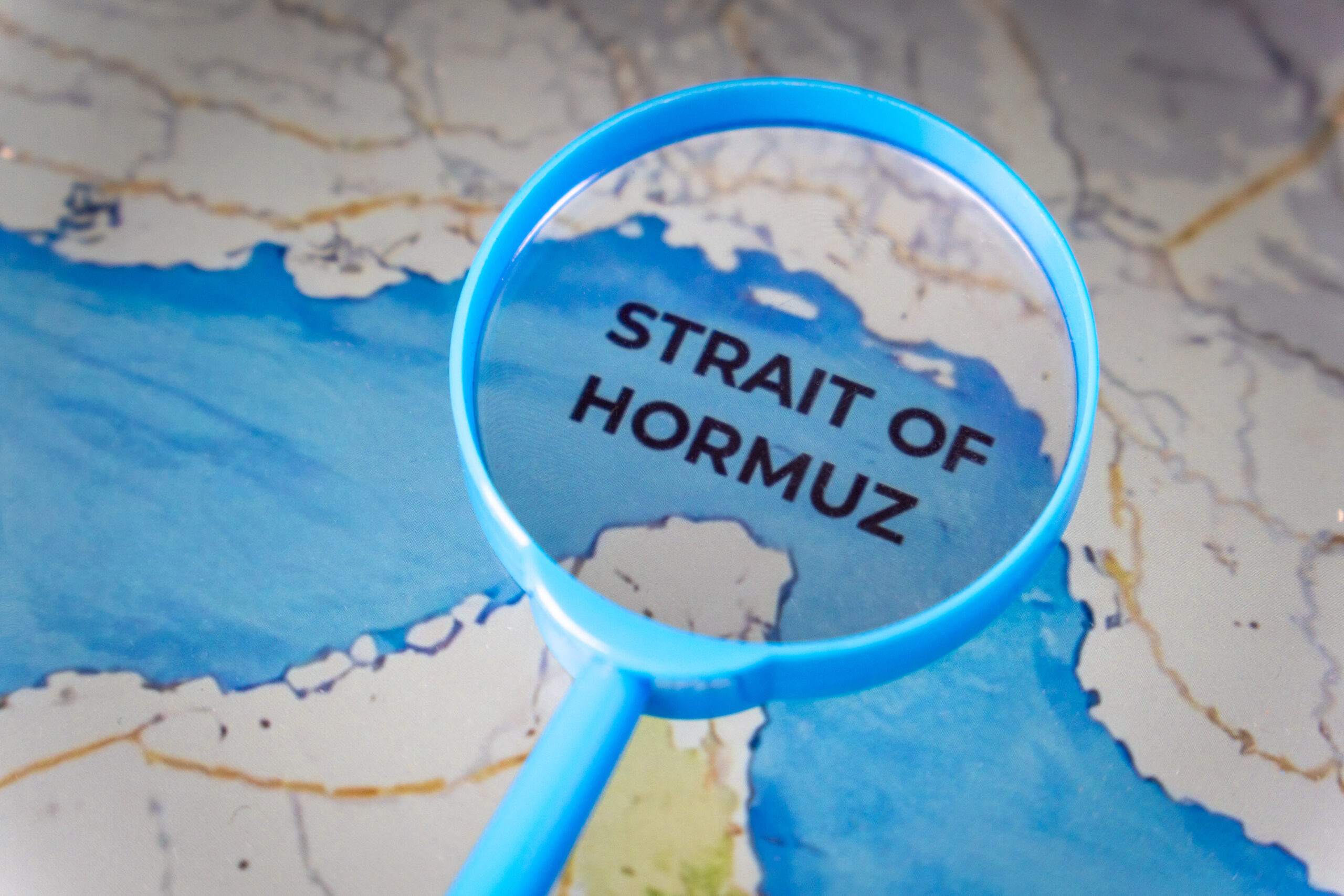
(Dreamstime image of Hormuz strait region)