
YELLOWKNIFE, NT – Today, the Honourable Tim Hodgson, Minister of Energy and Natural Resources; the Honourable Steven MacKinnon, Minister of Transport and Leader of the Government in the House of Commons; and the Honourable Rebecca Alty, Minister of Crown-Indigenous Relations, announced a significant milestone for the government’s plan to build Canada strong. Ministers announced that the government is initiating the process toward potential listing of three major projects – the Mackenzie Valley Highway Project, the Grays Bay Road and Port Project, and the Nuclear Waste Management Organization’s (NWMO)’s Deep Geological Repository (DGR) – as projects of national interest under the Act.
In March 2026, the Grays Bay Road and Port project and the Mackenzie Valley Highway project were referred to the MPO and today, the Government is referring the DGR to the MPO as well. Located in northwestern Ontario, near Wabigoon Lake Ojibway Nation and the Township of Ignace area, the DGR project is a world-recognized best practice solution for safe, long-term storage of all used nuclear fuel from Canada’s existing nuclear reactor fleet, as recognized under the federal government’s new Nuclear Energy Strategy.
Listing these projects under the Act would streamline and consolidate key federal permits and authorizations, subject to a document outlining the conditions under which the project may proceed. National interest listing of the project would provide confidence that key federal permits and authorizations for the project will be granted, shifting Canada’s regulatory focus from ‘whether’ the project should proceed to ‘how’ it will proceed. In the case of the Mackenzie Valley Highway and the Grays Bay Road and Port projects, this will be contingent on both projects successfully completing treaty-based impact assessment and regulatory processes.
The support of Indigenous communities for these projects is critical. To determine if these projects are of national interest and should be listed under the Act, consultations will be held with impacted Indigenous rights holders and communities, provinces and territories. Consultations for each project will begin over the coming weeks, with the aim of supporting a listing decision by the Government in relation to the projects in fall 2026. Canada is committed to upholding its duty to consult with Indigenous Peoples throughout the process. This commitment is guided by section 35 of the Constitution Act, 1982, while recognizing the United Nations Declaration on the Rights of Indigenous Peoples Act, and Modern Treaties and Self-Government Agreements.
Reasons these projects are candidates for listing under the Act:
- By delivering on Canada’s commitment to safe, long-term management of used nuclear fuel, NWMO’s DGR project presents the potential to unlock clean nuclear energy projects that strengthen Canada’s autonomy, resilience and security; ensure best-in-class safety and environmental standards; and catalyze new investment and create jobs. The opportunity presented for safety, security, economic growth, and Indigenous partnership aligns with the federal government’s new Nuclear Energy Strategy. The construction and operation of the DGR will generate sustained economic activity – including through Indigenous participation plans; and support the continued safe operation and expansion of Canada’s nuclear power facilities, in line with Canada’s Nuclear Strategy.
- Since their referral to the MPO in March, the Mackenzie Valley Highway and Grays Bay Road and Port projects have advanced as critical infrastructure priorities for Canada and the North. The projects would help connect communities, enhance Arctic security, and unlock significant economic and export potential in the North by creating vital trade and transportation corridors and enabling new natural resource exploration and development, especially for critical minerals. The MPO has assessed that listing these projects under the Act could improve predictability, efficiency, and coordination, and reduce risks of delays or cost increases.
Benefits of the Building Canada Act:
- For proponents, the Act offers more coordinated and predictable regulatory pathways and greater timeline certainty that reduces project risk and allows proponents to make earlier and better informed financing and investment decisions.
- For investors, the Act creates a more stable regulatory environment that catalyses long-term capital investment and enhances economic growth.
- For Indigenous Peoples, the Act creates a more consistent, centralized process that supports Indigenous engagement, consultation and partnership, and legislates a focus on projects that advance the interests of Indigenous Peoples.
- For Canadians, the Act advances major projects that create jobs and generate prosperity. Projects advanced under the Act will create stronger trade and supply chains that will help Canada diversify trade and strengthen long-term competitiveness.
This marks the first time projects have been considered for listing under the Act, reflecting Canada’s commitment to building transformative infrastructure. Listing under the Act does not alter Canada’s obligation to seeing through the impact assessment and regulatory processes set out in modern treaties, nor would it impact decisions related to safety and other matters under the Nuclear Safety and Control Act.
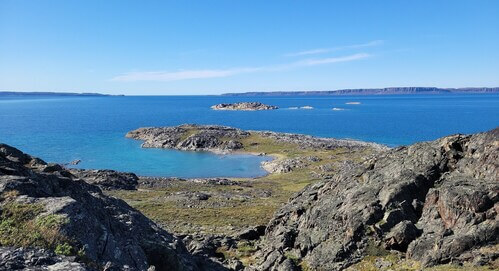
(Photo of Gray Bay region)