Washington — The U.S. Environmental Protection Agency transmitted two additional California waivers to Congress, including the Ocean-Going Vessels At Berth and Commercial Harbor Craft waivers. For 50 years, the precedent set under both Democratic and Republican administrations is that Clean Air Act waivers are not rules and are therefore not subject to review under the Congressional Review Act (CRA). EPA’s move to reclassify them is not only a misuse of CRA, but an unlawful and reckless attack on vital clean air protections.
“The federal government’s attack on California’s At Berth and Commercial Harbor Craft waivers is a misuse of the Congressional Review Act,” said Davina Hurt, Climate Policy Director, Pacific Environment. “For more than 50 years, Clean Air Act waiver programs have been respected by Republican and Democratic administrations alike. Instead of playing politics with our health, undermining the regulatory certainty businesses rely on, and jeopardizing billions of dollars in public and private investments made under these life-saving rules, Congress should recognize this blatant overreach by the oil and gas industry to continue to put profits over people. Communities, workers, businesses and our economy will pay the cost, not polluters, if Congress repeals California’s Clean Air waivers.”
The At Berth regulation provides regulatory certainty to the shipping industry, and is not a fly-by-night regulation. To protect public health, improve the environment, and meet the requirements of the federal Clean Air Act, California has been regulating emissions from ships docked at port through the At Berth Regulation since 2007. These rules were updated in 2020. Compliance requirements for the regulation have been phased in for over a decade based on vessel type and location, starting in 2014 with the last requirements becoming enforceable in 2027.
Shipping companies, ports, terminal operators, utilities, and equipment manufacturers have made long-term investments based on this established regulatory framework. Shore power infrastructure has been built, vessels have been retrofitted, equipment has been purchased, and workers have been hired to design, construct, install, operate and maintain these systems. Attempting to unwind a decades-long regulatory program after those investments have already been made risks creating stranded assets, disrupting business planning, discouraging future private investment, and placing companies that invested in America at a competitive disadvantage.
“Once again, EPA is targeting the communities already most burdened by polluted air,” said Andrea Marpillero-Colomina, PhD., Sustainable Communities Policy Advisor at GreenLatinos. “The At Berth and Commercial Harbor Craft rules exist because Latino and other frontline families living next to the Ports of Los Angeles and Long Beach have suffered decades of diesel pollution, asthma, and premature death from idling ships and outdated harbor craft. Weaponizing the Congressional Review Act to strip California of its Clean Air Act waiver authority knowingly hands polluters a green light to keep dumping toxic emissions into our neighborhoods.”
California Air Resources Board (CARB)’s economic analysis of the impacts of the 2020 At Berth Regulation update estimated that compliance with the regulation would cost about $0.0079 per gallon of fuel in the state supply. Even if the entire cost of compliance is passed down to the consumer, which is a needless assumption, given that the average California driver uses 350 gallons of gas a year, the impact to any driver will be less than $3 per year. Californians would pay pennies while saving billions of dollars in health care costs and cleaner air. Without these rules, it will undermine public health, regulatory certainty, and investments that businesses have already made to comply with the law.
Terrance L. Bankston, Ports Campaign Manager, Friends of the Earth, declared: “Portside communities already bear an unfair share of the health and environmental burden from freight pollution. Many neighborhoods near California’s ports are home to disproportionately low-income residents and communities of color who face elevated rates of asthma, cardiovascular disease, and other pollution-related illnesses. California’s Clean Air Act waivers are a vital tool for requiring cleaner technologies that reduce harmful emissions from marine vessels and port operations.”
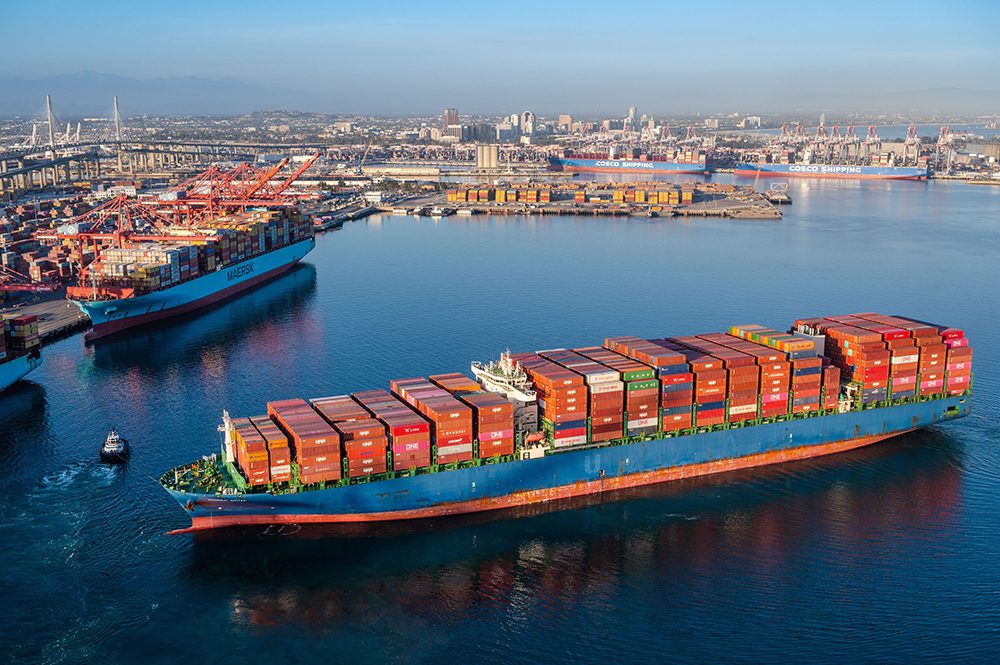
(Photo of Port of Long Beach)