
In the first nine months of 2026, Port of Antwerp-Bruges handled 200.9 million tonnes of goods, 0.8% less than in the same period last year. After a first half of the year marked by consecutive operational disruptions, container throughput recovered strongly: the third quarter was the best since late 2020. At the same time, geopolitical tensions, trade barriers, and the weak European manufacturing industry continue to weigh on various cargo flows.
After a first half of the year in which shipping was affected by adverse weather conditions, strikes in the nautical chain, and an oil spill in the Deurganck Dock, the start of the third quarter was also disrupted. In mid-July, a damaged container carrying hydrofluoric acid disrupted operations in the Deurganck Dock.
From August onwards, the trend reversed. The subsequent strong volumes led to the best performance since the fourth quarter of 2020. As a result, container throughput grew by 1.2% in TEUs over the first nine months. In tonnage, volume remained 0.6% below last year’s level. The growth was concentrated in empty containers (+11.7% in TEUs), while the throughput of full containers dropped by 1.3%. Rising import volumes and pressure on exports are increasing the imbalance and the need to reposition empty containers, particularly towards Asia.
The ongoing conflict in the Middle East also continues to impact cargo flows. Since March, no LNG cargoes from Qatar have arrived, and since mid-May, diesel supplies from the Middle East have also come to a halt. Container shipping lines adjusted their sailing schedules and developed alternative routes to serve the region. As a result, container exports to the Persian Gulf fell by 70%, while those to other parts of the Middle East nearly quintupled.
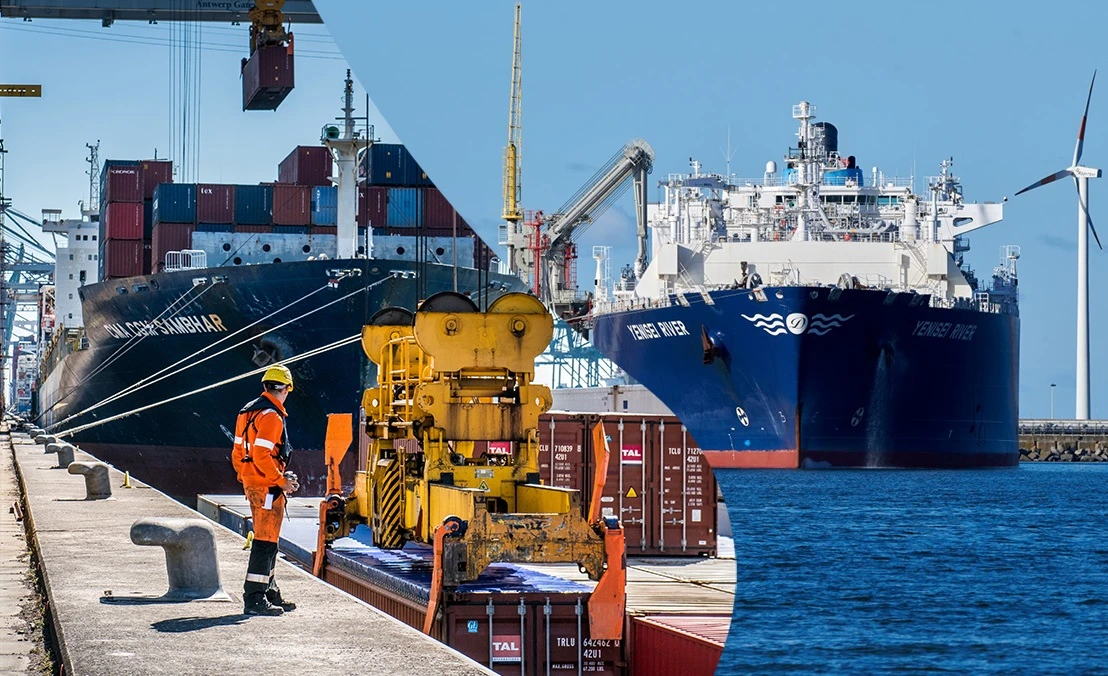
(Photo of Port of Antwerp-Bruges)