
The international maritime community marks World Maritime Day on September 24 as shipping faces the direct impacts of wider geopolitical tensions and conflict.
Merchant ships have been attacked in multiple conflict zones – from the Strait of Hormuz to the Black Sea and Sea of Azov – resulting in the deaths of dozens of innocent seafarers, and the disruption of global trade and critical supply chains.
Against this backdrop, the International Maritime Organization (IMO) is highlighting the importance of upholding and implementing the international regulatory framework that keeps shipping safe, secure and efficient, while protecting the people who work at sea.
In his official message to mark the day, IMO Secretary-General Arsenio Dominguez said:
“This year’s World Maritime Day theme, ‘From Policy to Practice: Powering Maritime Excellence’, recognizes the reality that regulations will deliver safer, more resilient, and cleaner shipping when they are implemented worldwide.
“Implementation must make a difference where it matters most – for the people working at sea. Seafarers come first. Always.”
The World Maritime Day theme spans 2026 and 2027, allowing Member States and partners to focus on turning global policy decisions into practical outcomes.
This includes translating IMO regulations into national legislation, strengthening enforcement, and enhancing training.
Closing the implementation gap
A central part of IMO’s work is supporting Member States in implementing IMO regulations effectively.
This year, IMO completed the first audit cycle under the IMO Member State Audit Scheme (IMSAS). Since the scheme became mandatory in 2016, 168 Member States (94% of the membership) have been audited on how effectively they meet their obligations under key IMO instruments.
The findings revealed that many countries still struggle to translate IMO rules into national law, with shortage of technical expertise and infrastructure, and weak oversight of ships being key challenges.
Based on this information, IMO will target technical assistance where it is needed most – including in Least Developed Countries and Small Island Developing States.
Effective implementation of international regulations ultimately hinges on capacity at national and local levels. IMO supports countries through:
- Technical assistance to draft or update national legislation, establish administrative frameworks, and strengthen enforcement.
- Training programmes for administrations, ports and seafarers, supported by regional centres and partnerships.
- Peer learning and knowledge exchange, through IMO projects, programmes and global networks.
The World Maritime Day theme focuses on practical implementation across key areas of IMO’s work, including:
- Safety and new technologies
- Preparing shipping for decarbonization
- Tackling fraudulent ship registration and maritime fraud
- Facilitation, digitalization and resilience
- Cyber security and maritime security
- Marine environment protection beyond carbon
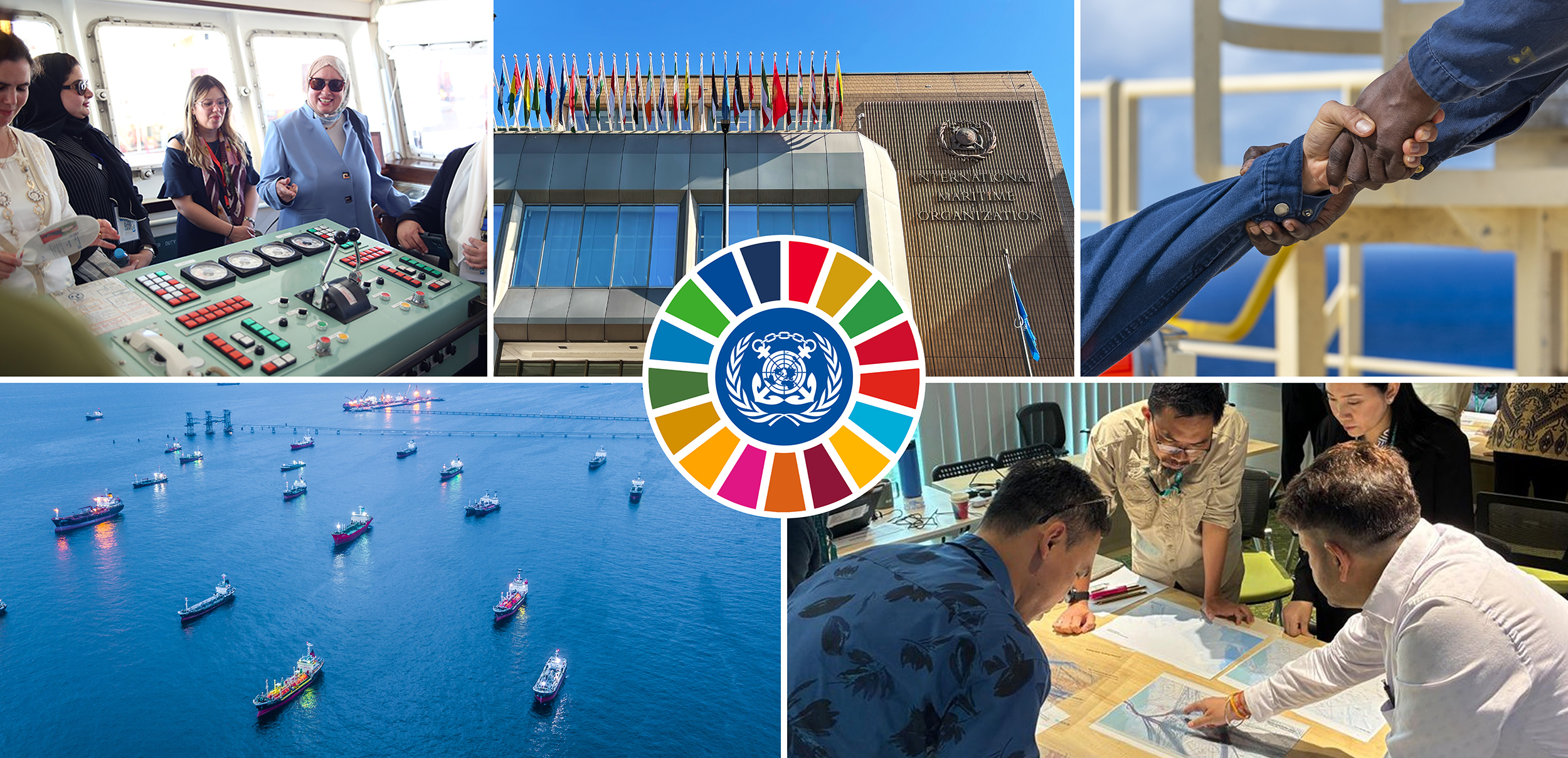
(Image from IMO)