

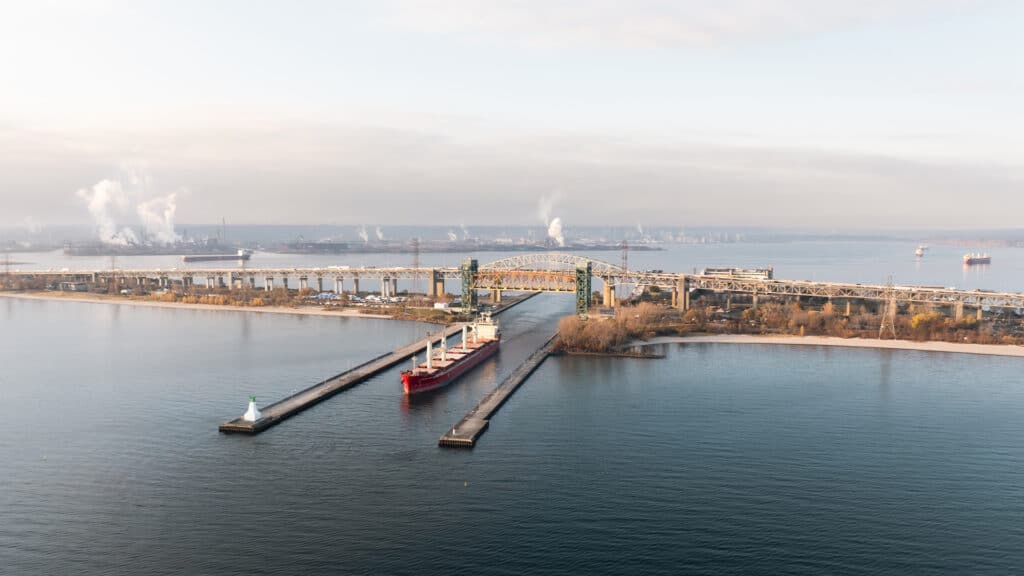
HOPA Ports (Hamilton–Oshawa Port Authority) has reported 10,814,699 metric tonnes (MT) of cargo handled across its growing Great Lakes Port Network in 2025 versus 11.4 million tonnes in 2024.
Despite a challenging global economic climate and shifting trade conditions, HOPA continued to advance cargo diversification and expand trade‑enabling infrastructure, strengthening Ontario’s competitiveness and opening new doors for Canadian exporters, stated a press release.
In 2025, the Port of Hamilton handled 10,350,606 MT, the Port of Oshawa handled 464,093 MT, and the Thorold Hub moved 116,561 MT. A total of 592 vessels called at Hamilton, 72 at Oshawa, and 9 at Thorold.
“This year demonstrated the resilience and adaptability of our port network,” said Ian Hamilton, President & CEO of HOPA Ports. “Through long‑term planning and strategic partnerships, we are building a Great Lakes Port Network that connects Ontario industries to global markets, supports economic growth, and strengthens supply chains for decades to come.”
Agri‑food cargo volumes including fertilizer, grain, and sugar, grew 3% over 2024, increasing by 85,796 MT across the port network. Raw sugar and fertilizer saw especially strong gains at the Port of Hamilton, supporting Ontario’s food manufacturing sector.
Gypsum, a key building material used in drywall, increased 33% over last year, driven by regional housing construction and commercial development.
Steel cargo experienced a sharp decline largely due to tariff instability. Other raw steel‑making materials fell 5%, mirroring wider manufacturing slowdowns.
The Port of Oshawa posted a 10% increase in cargo year-over-year, supported by the movement of oversized industrial equipment including components for Metrolinx’s Ontario Line tunnel boring project.
General cargo volumes jumped 92% over 2024; this includes machinery, parts, pressure vessels, transformer sets, and tank systems.
(Photo from HOPA)