According to an analysis from Ursa Shipbrokers, global seaborne bauxite trade has more than tripled in a decade and is running at another record pace in this year. The surge is driven overwhelmingly by shipments to China from West Africa’s Guinea, which now supplies an estimated four-fifths of internationally traded bauxite with aluminum producers in countries including Canada. China received more than 90% of bauxite cargoes loaded so far this year.
Bauxite is the primary raw ore required to produce aluminum. It serves as the essential starting material from which pure aluminum is extracted.
Ocean loadings rose from 81.3m tonnes in 2016 to a record 247.5m tonnes last year, Ursa Shipyards reported. Volumes reached 160.5m tonnes in the first seven months of 2026, up 9.5% year on year, with July loadings jumping 20.9% to 22.8m tonnes.
Bauxite now accounts for nearly 5% of global dry bulk loadings, compared with 1.8% in 2016. The trade has expanded at an annual rate of more than 13%, far outpacing growth across the wider dry bulk market.
Raw bauxite and alumina arrive primarily via ocean-going bulk carriers from countries with major reserves, notably Brazil, Guinea, and Australia.
China-bound volumes climbed from 52.7m tonnes in 2016 to 218.7m tonnes in 2025.
Guinea exported a record 127.4m tonnes during the first seven months of 2026, up 19.2%, with July shipments surging 44.3% year on year to 17.1m tonnes.
The long-haul Guinea-China route has made bauxite an increasingly important source of employment for larger bulk carriers. Capesizes have carried 27.7% of cumulative bauxite volumes tracked since 2013, followed by newcastlemaxes at 18.3% and post-panamaxes at 16.2%. Together, the three segments account for more than 62% of cargo intake.
The biggest bauxite producer in Guinea is the Société Minière de Boké (SMB), a joint venture consortium that handles massive open-pit operations in the country’s Boké region and accounting for accounts for approximately 38% of Guinea’s total national bauxite output.
Chalco (China Aluminum Corporation) is a large Chinese state-backed producer operating significant mining concessions in Guinea.
For its part, Compagnie des Bauxites de Guinée (CBG) is a historic, long-standing major producer jointly owned by the Guinean state and international aluminum giants.
US-based aluminum powerhouse Alcoa is a joint owner of Compagnie des Bauxites de Guinée, (CBG). The was formed in 1963 by the Government of Guinea and Halco (Mining), Inc. (Halco) to develop bauxite in the Boké region. The Government of Guinea owns 49% and Boké Investment Company owns 51% of CBG. Halco owns 100% of Boké Investment Company. Alcoa World Alumina LLC owns 45% of Halco.
With more than 2,200 employees, CBG mines the world-class Sangarédi bauxite deposit in northwestern Guinea, recognized for its rich ore body containing approximately 50 percent alumina.
A key CSL shipping connection
Alcoa maintains three major aluminum smelters and a Canadian corporate head office in Quebec, employing more than 2,500 people. The production sites include facilities in Baie-Comeau, Bécancour (ABI), and Deschambault, backed by dedicated modern logistics infrastructure like the newly inaugurated terminal at the Port of Trois-Rivières.
Among ports involved in bauxite and alumina shipments, Port Alfred on the Saguenay River at Ha-Ha-Bay is operated by Rio Tinto in support of regional aluminum production.
Meanwhile, in a recent development, CSL has announced the delivery of MV Wontanara, the first of five state-of-the-art transhipment shuttle vessels (TSVs) commissioned to service the Simandou iron ore. (See MM website report on July 29).
Designed by CSL and built at CSSC Chengxi Shipyard, this groundbreaking fleet of TSVs combines a 41,800-tonne deadweight capacity with a dual-boom self-unloading system that can transfer up to 12,000 tonnes of iron ore per hour, making it the fastest and most efficient TSV fleet in the world.
Purpose-built to move large volumes of iron ore efficiently between river terminals and offshore bulk carriers, the TSV design features a shallow-draft hull optimized for river navigation, five azimuth thrusters that deliver exceptional manoeuvrability and precision, and bi-directional navigation capability that enhances both safety and operational efficiency.
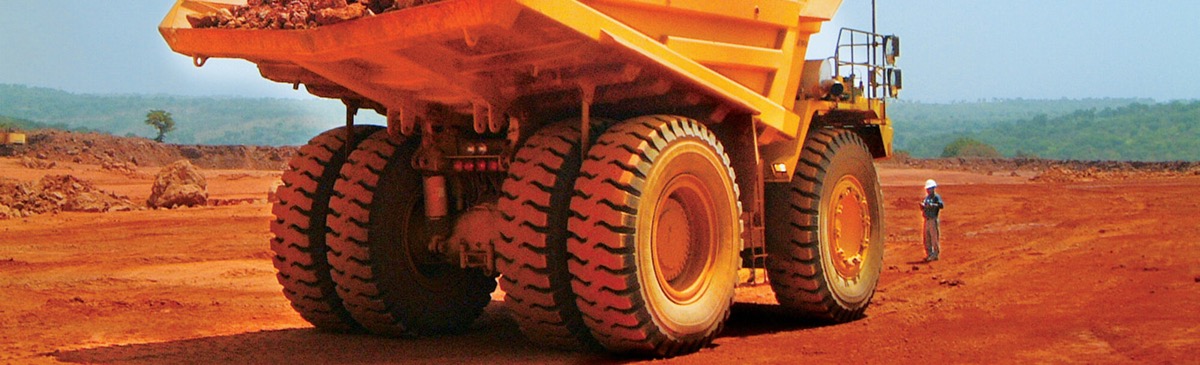
(Alcoa photo of Sangarédi mining operation)