

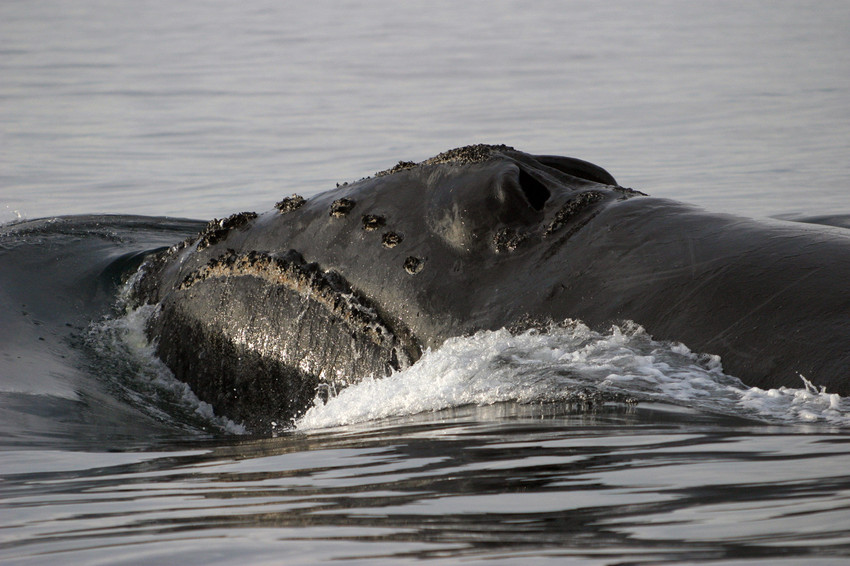
Eastport – The Center for Biological Diversity filed a motion today to intervene in the federal permitting process for an underwater data center proposed off the coast of Maine. The proposed project could harm endangered North Atlantic right whales and fin whales, along with other marine wildlife.
“Experimenting with an underwater data center in the habitat of one of the world’s most endangered whale populations is a truly terrible idea,” said Kristen Monsell, oceans legal director at the Center for Biological Diversity. “Whales already face too many human-caused threats. Noise from the surveys and vessels could stress and disturb wildlife. If it’s built, this underwater data center could make the bay even more dangerous. The project needs to be stopped in its tracks.”
The data center would be on about 27 acres near Eastport, Maine, in the Bay of Fundy, where endangered whales, sturgeon and other coastal wildlife live and feed.
On Aug. 25 the Federal Energy Regulatory Commission accepted an application from DeepGreen Western Passage SPV LLC to study feasibility for the project. The preliminary surveys and monitoring the company is proposing may increase vessel traffic and noise pollution, which could disrupt the behavior of right whales, fin whales and other wildlife and interfere with their communication and foraging. These activities could also affect prey, increase pollution, impair habitat and create collision or displacement risks.
If the data center is eventually built, it would amplify those risks and raise additional concerns for marine life, including entrapment, thermal discharges, contaminants, noise and construction impacts. DeepGreen has also identified a potential second phase that would expand the project to as much as 400 acres.
Fewer than 400 North Atlantic right whales remain, including only about 70 breeding females. The primary threats to right whales are fishing gear entanglements and vessel strikes. Fin whales, which are the second largest whale species on Earth, are also endangered throughout their range.
(Whale photo from John Dunbar/NOAA)