

By Michael Grey*

At a certain time in one’s life, you begin to appreciate a good obituary. Not necessarily of a life well lived, as there can be much interest in learning about the life of a thorough blackguard, or someone whose stars have never been altogether in the ascendant.
The late author John Winton wrote naval obituaries for many years in the Daily Telegraph and as a former submarine engineer was a past master at disinterring, with equal expertise, the lives of Sea Lords and officers who never made it to a brass hat. He, figuratively speaking, knew where all the bodies were buried in a naval career, of how one fatal decision, or an excessive glass of gin, a single fiercely expressed opinion or a grudge going back to teenage years, brutally ended a flight into the naval firmament.
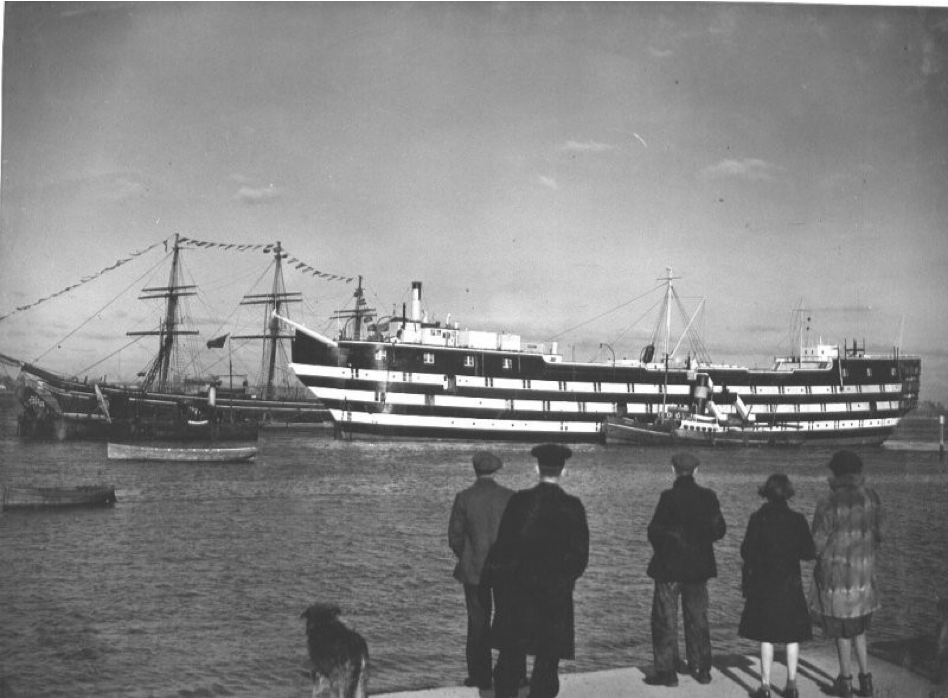
It is still a pleasure to “read between the lines” in any obituary, civil or military, where you discern that some deceased person who had been respected for his strict discipline had been somebody you never wanted to sail with twice. This past rainy December weekend has offered a plethora of interesting obituaries, with the very final issue of the “Dog Watch” which has been for the last century, the magazine of the Old Worcester association. HMS Worcester (per photo) it might be recalled, was the famous training ship that sat at her moorings in the Thames and prepared many generations of teenagers for a life at sea. It has been some fifty years since, along with several other establishments facing the melt-down of the British merchant marine, she ceased to exist, but old loyalties and friendships made, live on.
Reading a series of OW obituaries, one after another, it struck me just what interesting lives that they had led after they had gone off to sea in shipping companies and during their subsequent careers. The first book written by the celebrated maritime historian Peter Padfield was entitled “The Sea is a Magic Carpet” and that simple phrase summed up just what a good preparation it is for life in general. There was a huge variety in the lives lived by these people. Some had long careers afloat and in shipping management, while others came ashore to a whole variety of different ways of making a living.
There were merchant bankers, airline captains, restaurant and pub proprietors, accountants, pilots and harbourmasters, pioneers in the container revolution, shipbrokers; the list went on and on. The one common feature in almost all of these varied and sometimes very long lives, was something of a sad reflection of our British maritime industry; just about every shipping company that accepted these young would-be officers has long disappeared. And there were famous names here, because those training ships tended to send their youngsters to the crème de la crème of maritime enterprise. With very few exceptions, they have all gone. Just the other day somebody asked me why these companies just faded away, when sea transport itself has flourished, as have plenty of others.
Why was there no British Maersk, Evergreen, MSC, giant Japanese, or mighty Greeks or BW? Why did these famous names that are no more, just give up the will to live in the latter half of the 20th Century? There are plenty of explanations, some sympathetic and alluding to the geo-political earthquakes of the 1970s and the capital intensity of scale economics and technical change. Others are downright cruel, suggesting that the breed of university-educated, “merchant princes” all obsessed with taking hitherto private enterprises public and in thrall to the City of London had a lot to do with the extinction of some very famous names.
This generation lacked the resilience of its forebears, operating in a cyclical, derived-demand sector and found it easier to sell ships than invest in them, because that is what those who traded in shares liked. And then, there was nothing left to sell. Perhaps it was the weekend reading, but we perhaps should not conclude on an altogether gloomy note. Another OW (although happily still flourishing in his Australian home) is Captain Peter Hay, for many years a Barrier Reef pilot, who has just published a book about his own fascinating and varied career. The title “From Icebergs to Crocodiles” sums it up rather well, taking in a life that has seen adventures in conventional cargo liners, Antarctic research vessels, rackety coasters in the rivers of New Guinea and much more. One felt much more positive, even in the December rain, after reading that.
(Photo of HMS Worcester from hmsworcester.com)
*Michael Grey is former editor of Lloyd’s List. This column is published with the kind permission of The Maritime Advocate.