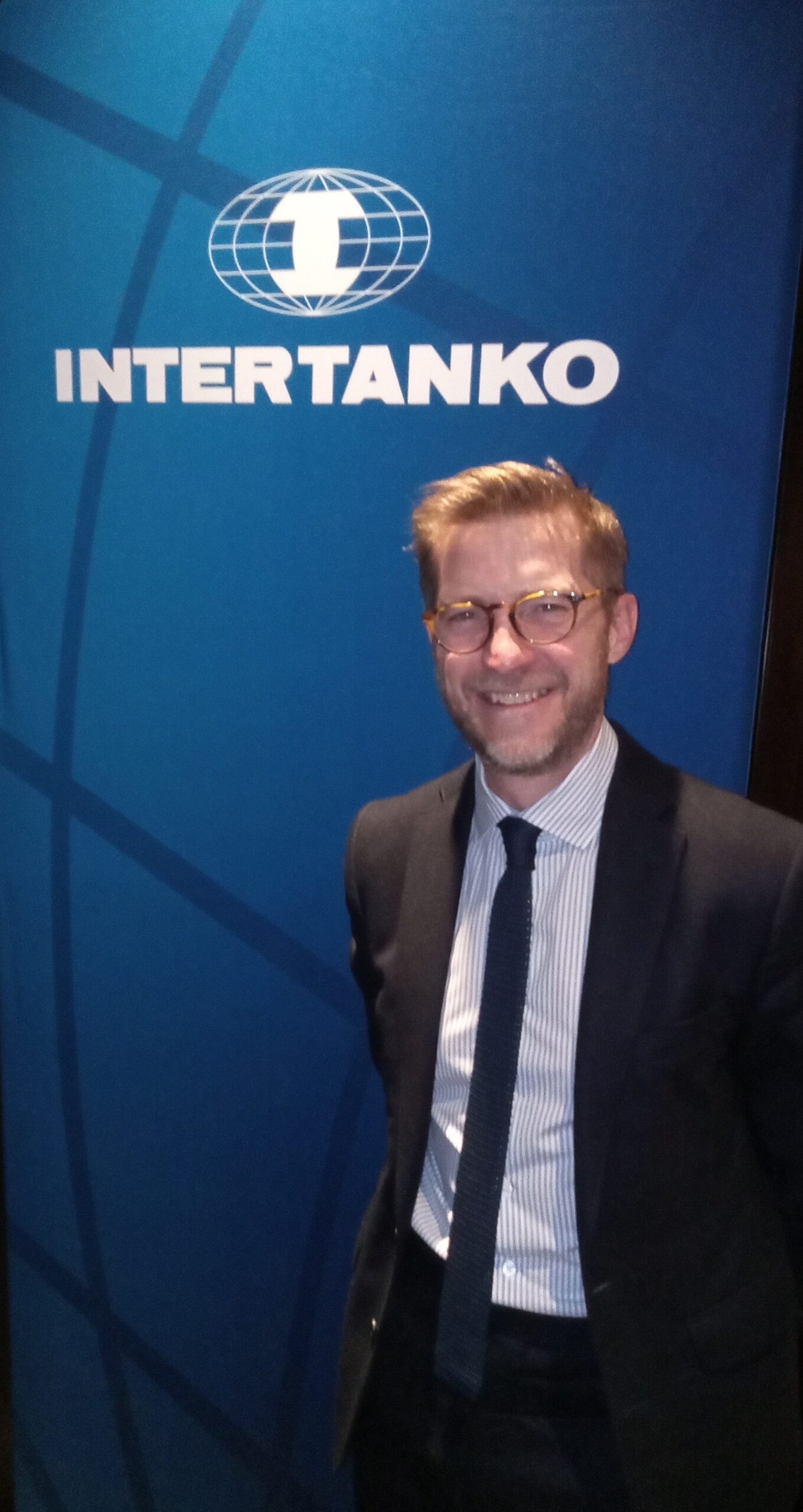
Tim Wilkins, INTERTANKO Managing Director.
by Colin Laughlan – West Coast correspondent
VANCOUVER, B.C. – Amid the world’s rapt attention on the war in the Middle East – and soaring oil prices as tankers remain stranded in the Persian Gulf – delegates from as far away as Europe and Asia participated yesterday in the debut conference held in Vancouver, Canada, of the North American Panel of INTERTANKO, the U.K.-headquartered global industry association representing over 80% of the world’s independent tanker fleet.
While the one-day event had been planned over the past year, the heightened peril of the war overshadowed the Association’s agenda of regular updates on best practice guidance on critical matters such as safety, regulatory requirements, and decarbonization.
“We have 30% of global crude that comes through the Strait of Hormuz, 20% of LNG and LPG as well, and about 350 tankers currently trapped inside the Persian Gulf – so it’s a significant problem,” Tim Wilkins, INTERTANKO Managing Director, told Maritime Magazine. “As the war goes on, the stress and anxiety about the welfare of the crews on board is something our members are getting more and more concerned about, as well as getting supplies to those vessels.”
In his presentation to a 50-member audience, Mr. Wilkins said his organization is in close communication with the US Navy, the NATO Centre for Naval Cooperation and Guidance for shipping, the European Union Naval Force, the United Kingdom Marine Trade Operation, and the Joint Maritime Information Centre, a project of a 47-nation naval partnership providing accurate information to the mercantile shipping industry.
He also said a possible agreement is its early stages for a transit corridor to be created around the IMO facilitated Ukraine grain corridor model in which Ukraine, Russia, Turkey and the IMO decided who would transit. However, he added an Iranian diplomatic note to the IMO states the Persian Gulf is open to ‘Non-aggressor” nations, but it leaves that interpretation to Iran.
Canada export opportunities
On another note, Mr. Wilkins told Maritime Magazine that with the conflict in the Persian Gulf right now, “all eyes are focused on other major exports of crude and LNG, and Canada is ripe now to increase its exports” and could become a major hub for those exports in the future. “Western Canada is becoming an increasingly important part of the world for the tanker industry,” he said.
“It’s interesting how the conflict over four weeks has turned eyes on other sources of energy for the global demand. There’s a compelling argument for Asia, Japan, Korea, China and Singapore to be receiving crude and LNG shipments from Canada.”
During the conference, Captain Oscar Pinto, Chair of the INTERTANKO North America Panel, and Director of Marine and Business Development at Vancouver headquartered Valles Steamship (Canada) Ltd., was recognized for the Seafarer Excellence Award established in his name by the International Sailor’s Society of Canada. Captain Pinto was instrumental in working with the Chamber of Shipping in B.C. to bring this year’s INTERTANKO Panel to Vancouver.
Said Mr. Wilkins, “It’s a unique situation where we’ve had our North American Panel for the first meeting in Vancouver. With a significant increase in crude and LNG from B.C. and so much interest in the work of INTERTANKO here, I look forward to coming back.”
(Photo by Colin Laughlan)