

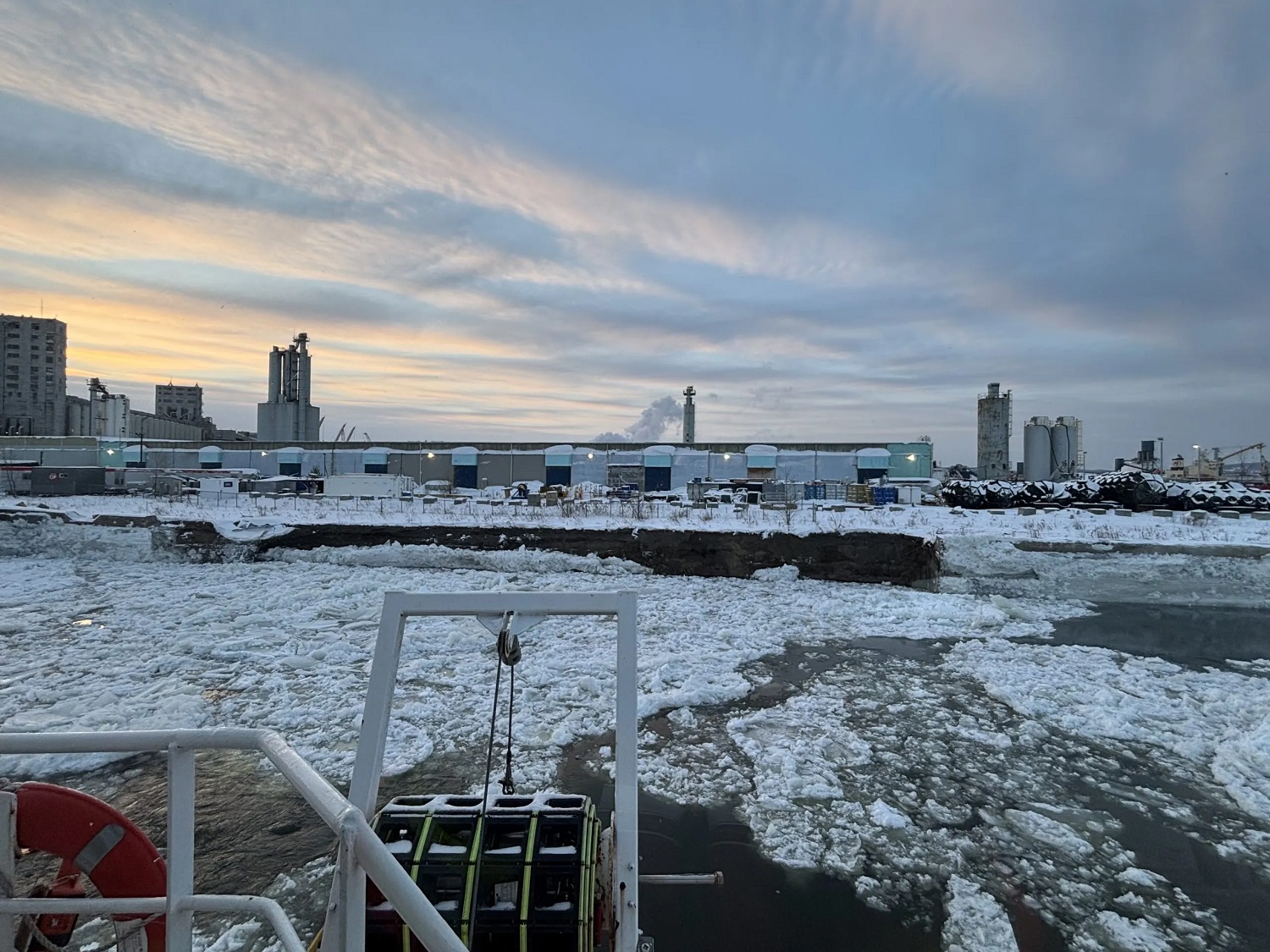
The Port of Québec has confirmed that a a 60-metre section of the copewall of wharf 25 collapsed into the St. Lawrence River Sunday between 7:00 AM and 1:00 PM. Another section, measuring around 40 metres, is in imminent danger of breaking.
Wharf 25 had reached the end of its useful life and had already been decommissioned for safety reasons. The affected area has been closed for almost 10 years. This event is to be expected for century-old infrastructure at the end of its life cycle.
Given the asset’s advanced state of decay, the progressive deterioration of the materials, and the harsh environment to which it is exposed, this type of failure is not surprising.
“As soon as the collapse was reported, Port of Québec teams mobilized and collaborated with port partners to secure the site, protect the public and our employees, and ensure navigation was safe. The situation is under control, and we are continuing to assess the damage so that we can take thorough and responsible action,” said Olga Farman, President & CEO, Port of Québec
Wharf 25, built around 1905, is a 224-metre-long structure of wooden caissons topped by a concrete copewall. Activity has already been limited for the past 10 years, and it was closed completely in March 2023 as it had reached the end of its useful life.
In addition to its operational role, wharf 25 served as a bulwark for intra-port logistics routes and port infrastructures. With the collapse of the copewall, this protective role is now compromised making the infrastructures even more vulnerable to erosion and river conditions. It’s a clear demonstration of the fact that deteriorating wharves have effects far beyond the Port’s borders, with direct consequences for the resilience of supply chains and transport networks.
Safety: Situation Under Control
Following the incident, the Port of Québec notified all relevant regulatory authorities and will cooperate fully with them, as dictated by current procedures.
Port teams also secured and extended the perimeter as a precautionary measure, implemented strict access control and continuous monitoring, and released the communications necessary for navigation. The expanded area is fully secure and inaccessible to both port operations and the general public.
In the short term, the Port plans to stabilize the site with riprap to limit erosion of the wharf. It is currently reviewing solutions with an external specialist to determine the most effective response. In the medium and long term, rebuilding the wharves remains the only sustainable solution for ensuring the safety, resilience, and longevity of port infrastructures.
(Photo from Port of Quebec)